
Auxiliaries Maintenance Warning Signs
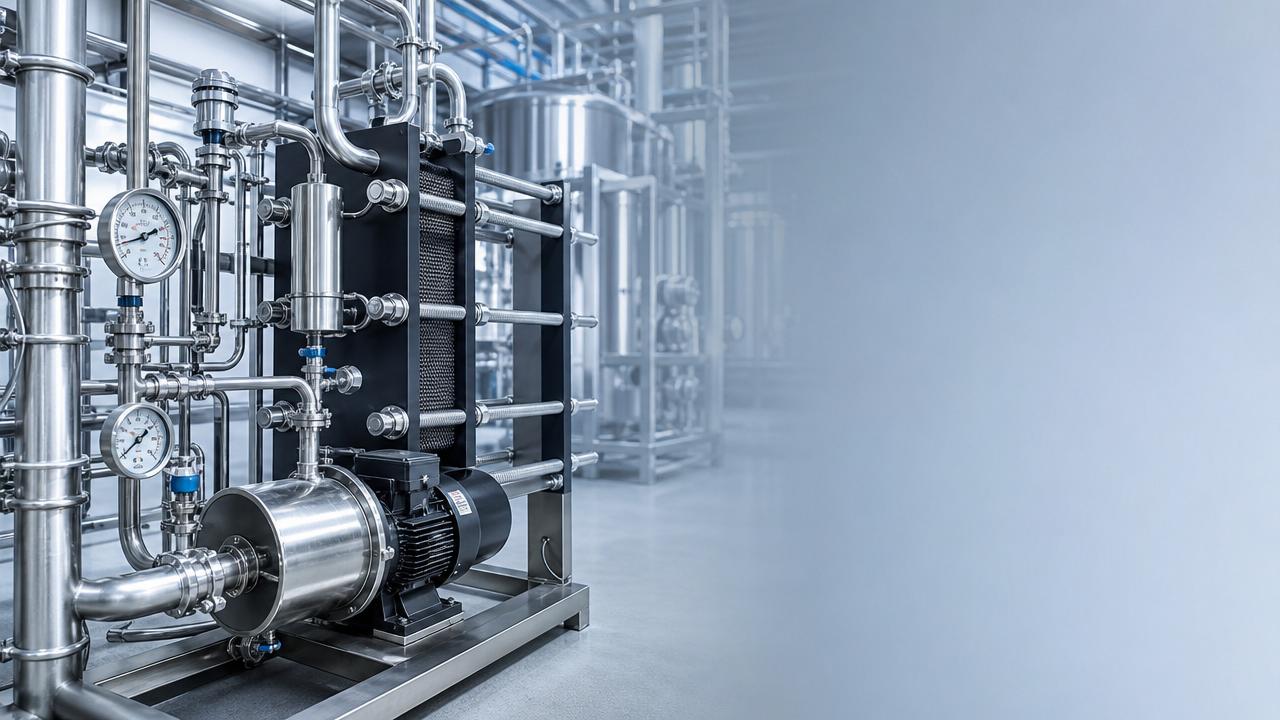
In brewing and fermentation systems, Auxiliaries often reveal early warning signs before a costly shutdown occurs. For after-sales maintenance teams, recognizing abnormal noise, unstable pressure, reduced cooling efficiency, leaks, or inconsistent performance can prevent equipment damage and production delays. This guide highlights the key maintenance indicators technicians should watch for, helping breweries and kombucha producers keep their systems safe, efficient, and compliant with daily operating demands.
For breweries, cider plants, and kombucha facilities, Auxiliaries are not secondary in practical operation. Pumps, chillers, heat exchangers, valves, compressors, glycol units, carbonation skids, control instruments, and CIP-related components keep the main brewing and fermentation process stable every day.
After-sales maintenance personnel usually see small deviations before operators notice product quality changes. A 0.5 bar pressure fluctuation, a 2°C cooling delay, or a minor seal leak can indicate a developing fault that may become expensive within 24–72 hours.
Why Auxiliary Warning Signs Matter in Daily Maintenance
Auxiliaries support temperature control, fluid transfer, gas handling, pressure regulation, cleaning, and automation. When they drift from normal conditions, fermentation stability and production scheduling become harder to protect.
A typical brewhouse or kombucha production line may include 10–30 auxiliary devices depending on capacity and automation level. Even one neglected device can interrupt a full batch cycle.
The maintenance team’s role in early detection
Maintenance staff should treat abnormal indicators as operating data, not isolated complaints. Comparing today’s reading with the last 7 days often reveals whether the issue is random or progressive.
- Record operating pressure, temperature, amperage, vibration, and noise at least once per shift.
- Check valves, hoses, fittings, and pump seals during startup and shutdown.
- Compare glycol supply and return temperatures during peak cooling demand.
- Review alarm logs after every CIP cycle, carbonation run, or fermentation transfer.
The best maintenance programs use simple thresholds. If a parameter changes by 10–15% from its normal baseline, technicians should investigate before waiting for a full failure alarm.
Common auxiliary assets in beer and kombucha systems
Auxiliaries vary by project, but the most critical categories are usually connected to heat exchange, liquid movement, pressure control, refrigeration, and hygienic cleaning.
For after-sales teams, the goal is not only to replace damaged parts. The goal is to understand why the component moved outside its designed working range.
Key Warning Signs Technicians Should Never Ignore
Most auxiliary failures announce themselves through measurable behavior. Noise, vibration, pressure loss, temperature drift, longer cycle times, and visible leakage should be checked within the same working day.
The following table summarizes frequent warning signs, likely causes, and practical first responses for brewing and fermentation Auxiliaries.
The key conclusion is simple: abnormal readings should be linked to operating conditions. A chiller struggling during a 35°C summer day is different from a chiller failing at moderate load.
Noise and vibration from pumps, compressors, and motors
A stable pump normally produces a consistent operating sound. Sudden rattling, grinding, or pulsing noise often means cavitation, air entrainment, or mechanical wear.
Technicians should compare vibration by touch, sound meter, or portable vibration meter. If vibration rises by 20% from baseline, schedule inspection before the next high-volume production run.
Unstable pressure in transfer and carbonation systems
Pressure instability can affect beer carbonation, kombucha carbonation, yeast handling, tank safety, and filtration performance. A drifting gauge may also hide a sensor or transmitter issue.
When pressure oscillates, check the simplest points first: regulator setting, hose condition, valve opening, clamp tightness, and gas supply pressure. These 5 checks often reduce downtime.
Cooling efficiency and glycol warning indicators
Reduced cooling performance is one of the most serious auxiliary symptoms. Fermentation temperature drift can affect aroma, acidity, attenuation, microbial activity, and batch consistency.
If a tank takes 30–60 minutes longer than usual to reach set point, maintenance staff should examine glycol concentration, heat exchanger fouling, pump output, and insulation condition.
Maintenance Inspection Priorities for Auxiliaries
A practical inspection plan should be frequency-based. Some checks belong to every shift, some to weekly service, and others to quarterly preventive maintenance.
For most breweries and kombucha producers, a 3-level schedule is easier to execute than a long checklist that no one can complete during peak production.
Daily, weekly, and monthly checkpoints
Auxiliaries should be inspected according to risk and production dependence. Devices supporting cooling, pressure, and hygienic cleaning deserve higher priority than non-critical accessories.
The table below provides a practical framework for after-sales maintenance teams managing beer brewing equipment, fermentation systems, chilling systems, and kombucha equipment.
This schedule helps teams separate urgent repair from planned maintenance. It also creates traceable records for audits, troubleshooting, warranty communication, and spare parts planning.
Documentation that improves troubleshooting speed
Good records reduce repeated diagnosis. Maintenance teams should keep photos, operating data, part replacement dates, wiring changes, and service notes in one accessible location.
- Record the equipment tag, location, and operating hours.
- Capture the fault symptom before adjustment or disassembly.
- Save parameter screenshots from PLC or controller pages.
- List replaced seals, bearings, sensors, and valves with dates.
- Confirm the result after 1 production cycle or 24 hours.
A 5-step service record is usually enough for practical maintenance. The important point is consistency, especially when several technicians cover different shifts.
Root Causes Behind Repeated Auxiliary Problems
If the same auxiliary problem returns within 2–6 weeks, the root cause is probably not the failed part alone. Operating conditions must be reviewed.
Common root causes include incorrect sizing, unstable utilities, poor cleaning habits, insufficient spare parts, operator misuse, and lack of commissioning data.
Incorrect operating range
Pumps and chillers are often damaged by being used outside the intended range. Too little flow causes overheating, while excessive flow may reduce heat exchange efficiency.
Maintenance teams should verify nameplate ratings, design flow, normal amperage, and control set points. A deviation of 15% or more deserves technical review.
Utility instability and site conditions
Auxiliaries rely on electricity, water, compressed air, steam, glycol, and sometimes CO2 or nitrogen. Poor utility stability directly affects equipment reliability.
Voltage fluctuations, water hardness, blocked air filters, or insufficient ventilation can shorten service life. Control cabinet temperature should generally remain within safe manufacturer limits.
Hygienic risks from small leaks
Minor leaks should not be treated as cosmetic issues. In brewing and kombucha production, product contact areas and cleaning circuits must maintain hygienic integrity.
A gasket seepage point, loose tri-clamp, or damaged valve seat can introduce contamination risk. Replace food-grade seals promptly when cracking, swelling, or deformation appears.
Choosing Spare Parts and Service Support for Long-Term Reliability
After-sales maintenance is more efficient when spare parts are planned before failure. Critical Auxiliaries should have basic consumables available on site.
For equipment shipped internationally, spare parts planning is especially important. Delivery may take 7–21 days depending on customs, logistics route, and component availability.
Recommended spare parts categories
A practical spare parts kit should reflect production risk. A small taproom brewery may need a compact kit, while a high-output facility needs deeper inventory.
- Seals and gaskets for pumps, valves, manways, carbonation fittings, and CIP circuits.
- Common sensors including temperature probes, pressure transmitters, and level-related components.
- Wear parts such as pump impellers, mechanical seals, bearings, and filter elements.
- Electrical items such as relays, fuses, contactors, terminal blocks, and emergency switches.
Maintenance teams should classify parts into 3 levels: immediate-use consumables, medium-risk replacement parts, and project-specific components that require supplier confirmation.
Supplier support criteria for maintenance teams
When selecting equipment or service support, after-sales staff should look beyond purchase price. Drawings, manuals, part identification, and remote troubleshooting reduce downtime.
Carry Brewtech designs and manufactures beer brewing equipment, fermentation systems, chilling systems, kombucha brewing equipment, carbonation systems, and turnkey projects according to customer requirements.
The company works with CE and PED compliance requirements where applicable, follows European and American quality expectations, and has passed ISO 9001 quality management audits.
4 evaluation factors before approving a service plan
- Can the supplier provide clear P&ID, wiring diagrams, and component lists?
- Are recommended spare parts matched to actual tank volume and system configuration?
- Can remote support review photos, videos, controller alarms, and parameter values?
- Is the maintenance plan compatible with local standards, safety practices, and production scheduling?
These 4 factors help reduce miscommunication between site technicians, purchasing teams, and equipment suppliers. They also support better lifecycle cost control.
A Practical 6-Step Response Plan When Warning Signs Appear
When Auxiliaries show abnormal behavior, technicians need a repeatable response process. Random adjustment can mask symptoms and make later troubleshooting harder.
The following 6-step process is suitable for many brewing and fermentation support systems, from glycol circulation to transfer pumps and carbonation controls.
Step-by-step field response
- Stabilize the process and decide whether production can continue safely for the next 1–2 hours.
- Record baseline data: pressure, temperature, amperage, flow condition, alarm code, and operating mode.
- Inspect visible mechanical points, including clamps, hoses, seals, vents, strainers, and valve positions.
- Check utility inputs such as voltage, water supply, air pressure, refrigerant-related alarms, and gas pressure.
- Perform controlled testing after one adjustment at a time, avoiding multiple simultaneous changes.
- Confirm stability after restart and monitor for at least 30 minutes or one complete operating cycle.
This process protects both safety and diagnosis accuracy. It also creates useful evidence when remote engineering support is needed from the equipment supplier.
When to stop production immediately
Not every auxiliary warning sign requires shutdown, but some conditions should trigger immediate stop. Safety and product integrity must come before output targets.
- Electrical burning smell, smoke, overheating terminal, or repeated breaker trip.
- Rapid pressure increase near safety limits or failed pressure relief device.
- Product-contact leak, chemical leak, or glycol leak close to open product areas.
- Pump running dry, severe cavitation, or motor temperature rising abnormally.
A clear stop rule reduces hesitation during night shifts or weekend production. It also protects operators, tanks, batches, and downstream packaging schedules.
Maintenance Mistakes That Increase Downtime
Many auxiliary failures become serious because early symptoms are treated casually. Avoiding 5 common mistakes can significantly improve service efficiency.
The first mistake is replacing parts without confirming the root cause. A failed seal may be caused by dry running, misalignment, or chemical incompatibility.
Common mistakes to eliminate
- Ignoring small leaks because production is still running.
- Changing controller settings without recording original values.
- Using non-food-grade or incorrectly sized replacement gaskets.
- Skipping calibration after replacing sensors or pressure instruments.
- Cleaning heat exchangers only after cooling performance has already declined.
Correcting these habits usually costs less than emergency repair. It also improves operator confidence because maintenance actions become predictable and traceable.
The value of commissioning data
Commissioning data is the reference point for future diagnosis. It should include normal pressure, temperature response, motor current, set points, and cycle duration.
Without these numbers, technicians may rely on memory. With them, a maintenance team can identify abnormal changes within minutes instead of hours.
Building a Reliable Auxiliary Maintenance Culture
Reliable Auxiliaries come from good equipment design, correct installation, disciplined operation, and timely service. Maintenance teams are central to all 4 elements.
Carry Brewtech supports breweries and kombucha producers with customized system solutions, equipment design, manufacturing, sales, and service for global customers in more than 30 countries.
What a strong maintenance partnership should deliver
A strong supplier relationship helps after-sales technicians move from reactive repair to preventive control. That shift reduces production risk and improves equipment lifecycle value.
- Equipment designed around actual production capacity, cleaning practice, and site utilities.
- Practical documentation for maintenance, operation, spare parts, and troubleshooting.
- Responsive service communication when technicians report abnormal data or urgent symptoms.
- Customized recommendations for beer brewing, fermentation, chilling, kombucha brewing, and carbonation systems.
When auxiliary warning signs are recognized early, breweries protect product quality, staff safety, and production continuity. The best results come from clear thresholds, complete records, and service support that understands brewing and fermentation operations.
If your maintenance team is reviewing auxiliary reliability, planning spare parts, or troubleshooting recurring failures, Carry Brewtech can help evaluate system conditions and provide customized guidance. Contact us today to discuss your equipment details, request a tailored maintenance solution, or learn more about our brewing and kombucha system support.
Quick Links
- ▶ Kombucha Brew Safety Mistakes
- ▶ Kombucha Brew Market Trends 2026
- ▶ Kombucha Brew Equipment Selection
- ▶ Kombucha Brew Cost and Yield Basics
- ▶ Auxiliaries That Improve Brew Stability
- ▶ Auxiliaries Maintenance Warning Signs
- ▶ How to Budget for Auxiliaries
- ▶ Auxiliaries Selection for Small Breweries
- ▶ Auxiliaries and Production Downtime Risk
- ▶ Brew Fittings Material Comparison
Message
Send Your Inquiry
We welcome your cooperation and we will develop with you.