
Auxiliaries Selection for Small Breweries
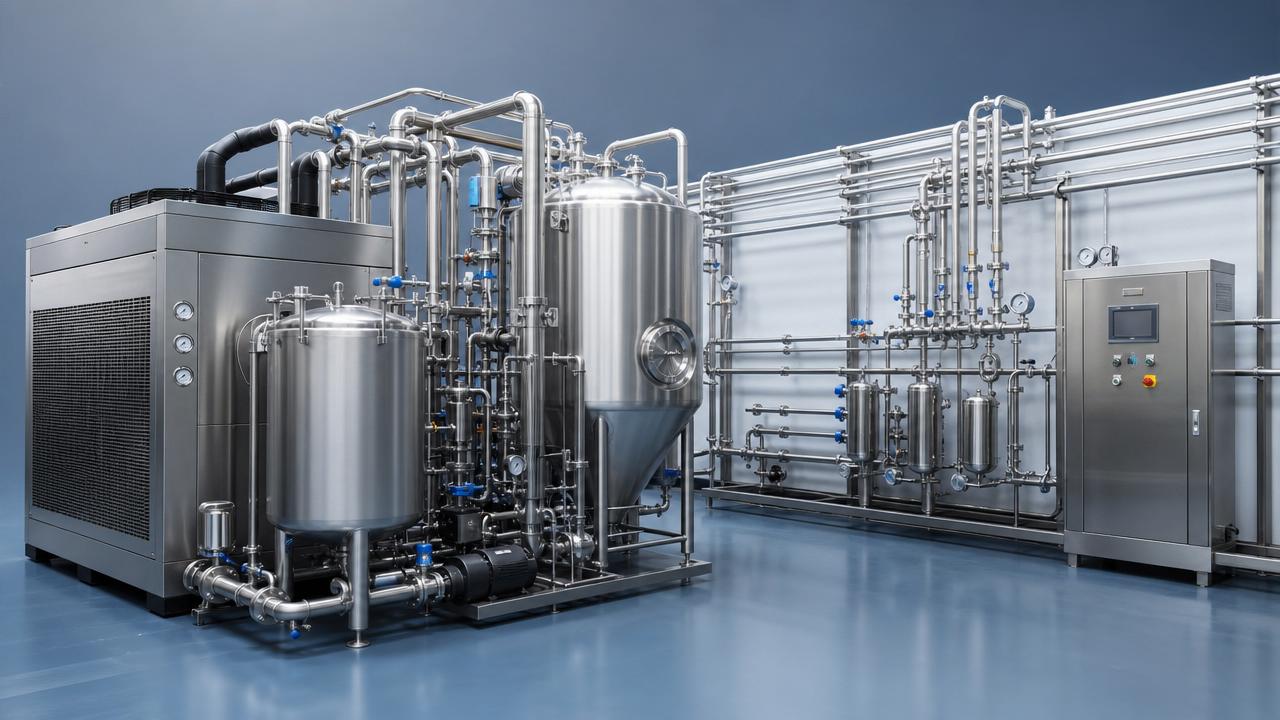
Selecting the right Auxiliaries is now a strategic decision for small breweries seeking controlled investment, stable output, and flexible expansion.
As brewing projects become more customized, Auxiliaries influence energy use, labor intensity, cleaning reliability, fermentation stability, and final beer consistency.
The focus is shifting from buying separate devices to building coordinated support systems that match real production goals.
Small Brewery Auxiliaries Are Moving From Optional Add-Ons To Core Infrastructure
In earlier projects, Auxiliaries were often selected after tanks, brewhouses, and layout decisions were finalized.
That approach is changing because chilling, cleaning, carbonation, pumping, and control support directly shape daily operating performance.
Small breweries now expect compact systems, lower utility consumption, faster cleaning cycles, and easier process monitoring.
This makes Auxiliaries central to brewhouse efficiency, fermentation reliability, product protection, and long-term cost management.
The trend is especially clear in projects that need beer brewing equipment, fermentation systems, chilling systems, and turnkey integration.
Key Trend Signals Behind Modern Auxiliaries Selection
Several signals show why Auxiliaries are receiving more attention during early brewery planning.
- Energy costs are pushing breweries toward efficient chilling, glycol management, and heat recovery planning.
- Labor pressure increases demand for easier cleaning, safer operation, and simplified equipment handling.
- Product variety requires flexible Auxiliaries for different fermentation schedules and carbonation targets.
- Export projects require closer attention to CE, PED, ISO 9001, and documentation control.
- Compact brewery spaces need integrated layouts that reduce pipe length and operating interference.
These changes make selection less price-driven and more focused on lifecycle value.
Why The Demand For Better Auxiliaries Is Accelerating
The demand for better Auxiliaries is not only caused by equipment upgrades.
It is driven by changes in production expectations, compliance awareness, and return-on-investment pressure.
For small breweries, the most expensive Auxiliaries are not always the wrong choice.
The real risk is choosing systems that cannot support stable production conditions.
Chilling And Fermentation Support Are Becoming Priority Areas
Among all Auxiliaries, chilling equipment usually has the strongest influence on fermentation quality.
Undersized glycol systems can delay cooling, extend tank occupation, and create flavor variation between batches.
Oversized systems may waste energy and increase initial investment beyond actual production needs.
A balanced design should consider tank volume, batch frequency, ambient temperature, peak load, and expansion margin.
Fermentation support Auxiliaries also include temperature probes, control panels, insulation, valves, and sanitary pipe connections.
When these elements are compatible, fermentation becomes more predictable and less dependent on manual correction.
Practical Chilling Selection Points
- Calculate peak cooling demand, not only average daily load.
- Check pump flow, glycol concentration, and tank jacket requirements.
- Reserve capacity for future fermentation tanks when expansion is likely.
- Confirm control accuracy for lagering, crash cooling, and storage conditions.
Cleaning Auxiliaries Are Shaping Food Safety And Labor Efficiency
CIP systems, cleaning pumps, spray balls, chemical tanks, and hoses are essential Auxiliaries in sanitary brewing.
Poor cleaning design increases contamination risk and raises the hidden cost of labor, water, and chemicals.
Small breweries often underestimate the importance of flow rate, temperature stability, and return drainage.
A good cleaning setup should match tank geometry, pipe diameter, and soil load after each process.
The market trend is toward safer, repeatable cleaning with fewer manual disassembly steps.
This trend makes cleaning Auxiliaries a key factor in protecting brand reputation and batch consistency.
Carbonation And Packaging Support Are Raising Quality Expectations
Carbonation Auxiliaries influence mouthfeel, foam stability, package performance, and consumer perception.
For small breweries, carbonation stones, pressure control, CO2 supply, gauges, and bright beer tank connections require careful matching.
Inconsistent carbonation can cause slow packaging, excessive foaming, or dissatisfied customers after distribution.
The same logic applies to kombucha carbonation systems, where balance and process control are also important.
As beverage portfolios diversify, Auxiliaries must support both classic beer styles and emerging fermented drinks.
Integration Is Becoming More Valuable Than Individual Device Performance
A single high-quality component cannot solve problems caused by poor system integration.
Auxiliaries should be evaluated as part of the complete brewery process, not as isolated purchases.
Pipe routing, pump sizing, valve selection, control logic, drainage, and maintenance access must work together.
When integration is planned early, installation becomes smoother and commissioning risks are reduced.
This is where customized turnkey project experience becomes valuable for small and growing breweries.
Carry Brewtech designs brewing systems and related Auxiliaries around production targets, space limitations, standards, and service requirements.
How Auxiliaries Affect Different Brewery Operations
The influence of Auxiliaries appears across multiple business and process areas.
- Brewhouse operation: Pumps, heat exchange, and water handling affect timing and extraction consistency.
- Fermentation: Cooling, controls, and sanitary fittings affect yeast performance and flavor stability.
- Cleaning: CIP Auxiliaries influence contamination control, downtime, and chemical consumption.
- Packaging: Carbonation, pressure control, and transfer systems affect foam, filling speed, and loss rate.
- Expansion: Scalable Auxiliaries reduce future replacement and improve investment continuity.
These impacts explain why early evaluation often prevents expensive corrections after installation.
Core Selection Points That Deserve More Attention
Choosing Auxiliaries requires a structured review of performance, compatibility, documentation, and support.
- Match capacity with realistic production plans, not only ideal expansion ambitions.
- Confirm material quality, welding, sanitary design, and pressure requirements.
- Review CE, PED, ISO 9001, and other required compliance documentation.
- Check whether controls are easy to operate, troubleshoot, and maintain.
- Evaluate spare parts availability and remote technical support.
- Ensure Auxiliaries fit the brewery layout before final installation drawings.
Low purchase price should be compared with energy cost, downtime risk, cleaning time, and future modification expense.
A Practical Decision Framework For Future-Ready Auxiliaries
A structured framework helps reduce uncertainty when comparing Auxiliaries across suppliers and technical proposals.
This framework supports decisions based on long-term brewery performance rather than single-item comparison.
What Small Breweries Should Watch Next
The next stage of Auxiliaries development will likely focus on smarter monitoring, modular design, and lower operating cost.
More breweries will expect compact systems that are easier to install, maintain, and expand.
Demand will also grow for equipment that supports beer, kombucha, and other fermented beverage projects.
Suppliers with engineering experience, quality control, and global service ability will become more important.
Carry Brewtech has served customers in more than 30 countries with customized brewing and fermentation system solutions.
Its CE and PED compliant manufacturing, ISO 9001 quality management, and project experience support demanding brewery applications.
Actionable Next Steps For Selecting Auxiliaries
Before finalizing Auxiliaries, define annual output, batch size, beverage types, available space, utilities, and expansion expectations.
Then compare proposals by system compatibility, total operating cost, certification readiness, and after-sales support.
Request layout drawings, process connections, utility requirements, and maintenance access details before placing an order.
For customized brewery projects, early technical communication helps avoid mismatched Auxiliaries and unnecessary future modification.
Carry Brewtech can support equipment selection, system design, and turnkey planning for beer and kombucha production needs.
A well-planned Auxiliaries strategy helps small breweries build efficient operations, stable quality, and scalable production from the start.
Quick Links
- ▶ Kombucha Brew Safety Mistakes
- ▶ Kombucha Brew Market Trends 2026
- ▶ Kombucha Brew Equipment Selection
- ▶ Kombucha Brew Cost and Yield Basics
- ▶ Auxiliaries That Improve Brew Stability
- ▶ Auxiliaries Maintenance Warning Signs
- ▶ How to Budget for Auxiliaries
- ▶ Auxiliaries Selection for Small Breweries
- ▶ Auxiliaries and Production Downtime Risk
- ▶ Brew Fittings Material Comparison
Message
Send Your Inquiry
We welcome your cooperation and we will develop with you.