
Kombucha Brew Equipment Selection
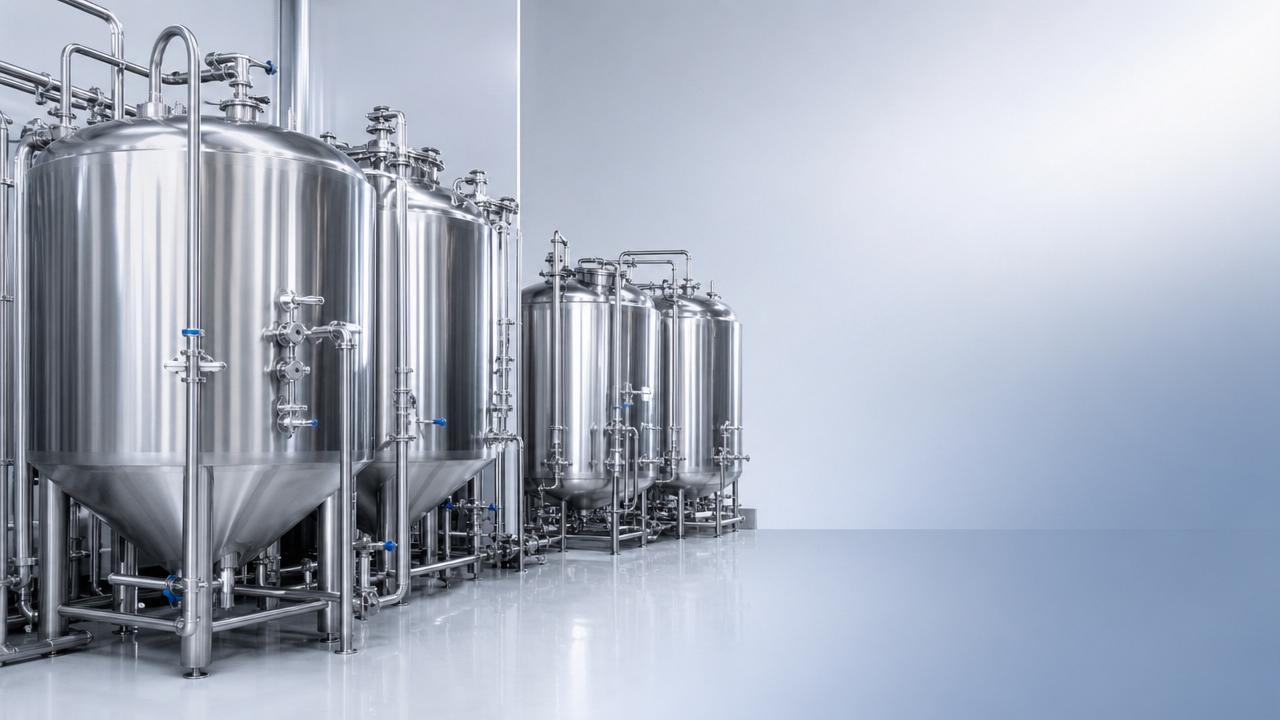
Selecting the right Kombucha Brew equipment is a technical decision that directly affects fermentation stability, product consistency, sanitation efficiency, and long-term operating costs.
As kombucha production becomes more standardized, equipment choices are moving from simple vessels toward controlled, hygienic, and scalable processing systems.
For reliable Kombucha Brew operations, the evaluation now includes tank geometry, cooling capacity, carbonation accuracy, automation, safety compliance, and service support.
Kombucha Brew Equipment Is Shifting Toward Controlled Production
The kombucha market has moved beyond small experimental batches and informal fermentation rooms.
More producers now require repeatable flavor, stable acidity, predictable alcohol levels, and clean packaging performance.
This change makes Kombucha Brew equipment selection a strategic decision rather than a basic tank purchase.
Open fermentation, inconsistent cooling, and manual transfers can still work at small scale.
However, they often create quality variation, contamination risk, labor pressure, and uncertain production planning.
Modern Kombucha Brew systems therefore focus on stainless steel construction, sanitary fittings, accurate temperature control, and integrated downstream handling.
Key Trend Signals in Kombucha Brew System Selection
Several equipment trends are becoming visible across commercial kombucha facilities.
They reflect stronger expectations for food safety, production efficiency, and consistent sensory performance.
- Closed or semi-closed Kombucha Brew tanks are replacing highly exposed fermentation setups.
- CIP-ready designs are becoming standard for reducing cleaning time and chemical waste.
- Chilled brite tanks and carbonation systems are increasingly linked to packaging quality.
- Automation is being adopted for temperature logging, alarms, recipe control, and batch traceability.
- Compliance with CE, PED, ISO, and recognized welding standards is influencing supplier decisions.
These signals show that Kombucha Brew equipment is now judged by total production reliability.
Initial price remains important, but downtime, sanitation cost, batch loss, and expansion limits are more visible.
Why the Shift Is Happening in Kombucha Brew Production
The equipment upgrade trend is driven by practical operating pressures.
Fermented beverages require microbiological control, but kombucha also depends on living cultures and organic acid balance.
These forces make low-cost equipment less attractive when it cannot support controlled growth.
A better Kombucha Brew system should reduce risk across fermentation, chilling, carbonation, and cleaning.
Fermentation Tank Design Remains the Core Selection Point
The fermentation vessel is the foundation of every Kombucha Brew line.
Tank design influences oxygen exposure, sanitation access, thermal performance, and yeast-bacteria activity.
Food-grade stainless steel is preferred because it resists corrosion, supports cleaning, and maintains a professional hygiene standard.
Material selection should include stainless steel grade, inner surface finish, weld quality, and passivation treatment.
For Kombucha Brew applications, smooth internal surfaces help limit residue buildup and unwanted microbial harborage.
Tank geometry affects flavor and operations
Wide access ports improve inspection and cleaning, while sanitary outlets support controlled racking and product transfer.
Cooling jackets should match batch size, ambient conditions, and fermentation heat load.
A practical Kombucha Brew tank design balances fermentation biology with daily production handling.
Chilling and Carbonation Are Becoming Decision-Critical
Temperature control is one of the strongest influences on kombucha fermentation behavior.
Poor cooling capacity can create flavor drift, excessive acidity, delayed production, or unstable carbonation.
A complete Kombucha Brew setup should consider glycol chillers, insulated tanks, cold liquor handling, and piping efficiency.
Carbonation is equally important when products move into cans, bottles, or kegs.
Under-carbonation weakens mouthfeel, while over-carbonation creates foaming, filling loss, and package pressure concerns.
Modern Kombucha Brew carbonation systems often include brite tanks, carbonation stones, pressure control, and dissolved CO2 monitoring.
- Confirm cooling capacity at peak ambient temperature.
- Check whether tanks have proper insulation and jacket coverage.
- Evaluate carbonation accuracy for each packaging format.
- Assess oxygen pickup control during transfer and filling.
Sanitation Efficiency Is Changing Cost Calculations
Cleaning design directly affects labor, water use, chemical use, and contamination risk.
A cheaper Kombucha Brew system may become expensive if cleaning is slow or inconsistent.
CIP spray balls, sanitary pumps, cleanable valves, and drainable pipework reduce manual intervention.
Dead legs, rough welds, inaccessible fittings, and poorly designed gaskets increase hygiene risk.
The trend is clear: sanitation is no longer a back-end concern.
It is a central factor in Kombucha Brew equipment comparison and long-term performance evaluation.
Automation Is Moving From Optional to Practical
Automation does not need to replace skilled operation.
Its value lies in reducing variation and improving visibility across multiple batches.
For Kombucha Brew production, useful automation often starts with temperature control and data recording.
More advanced systems may include recipe management, valve control, alarm history, and remote support.
The best level of automation depends on batch volume, staffing model, product range, and expansion plan.
Automation should support the Kombucha Brew process, not add unnecessary complexity.
Simple, reliable controls are usually more valuable than advanced features that are rarely used.
Compliance and Supplier Capability Now Carry More Weight
International projects increasingly require documented quality standards and engineering consistency.
Equipment built to CE and PED standards supports safer installation and stronger regulatory confidence.
ISO 9001 certification also indicates that production, inspection, and quality management follow defined processes.
Carry Brewtech designs and manufactures brewing and fermentation systems under European and American quality expectations.
Established in 2017, Carry Brewtech supplies beer brewing equipment, fermentation systems, chilling systems, and Kombucha Brew solutions worldwide.
Its projects include kombucha brewing equipment, kombucha carbonation systems, and customized turnkey solutions for different production requirements.
With customers in more than 30 countries, global service experience helps reduce communication risk and project uncertainty.
How Equipment Choices Affect Production Stages
Every equipment decision has effects beyond its immediate function.
A Kombucha Brew tank can influence cleaning schedules, cooling load, product transfer, and packaging stability.
- Fermentation: stable temperature and sanitary design improve batch repeatability.
- Blending: controlled mixing supports consistent flavor, acidity, and ingredient distribution.
- Chilling: efficient cooling slows fermentation and prepares product for carbonation.
- Carbonation: accurate pressure and CO2 control improve mouthfeel and filling performance.
- Cleaning: CIP compatibility reduces turnaround time and lowers contamination exposure.
The most resilient Kombucha Brew systems are designed as connected processes rather than isolated tanks.
Selection Priorities for the Next Equipment Upgrade
Future-ready equipment should match current production while allowing practical expansion.
Oversizing too early increases investment pressure, but undersizing creates bottlenecks and repeated rework.
- Define target batch volume, weekly output, and seasonal production peaks.
- Confirm stainless steel quality, internal finish, weld inspection, and sanitary fittings.
- Match chilling capacity to fermentation temperature and packaging needs.
- Select carbonation control based on bottle, can, keg, or hybrid packaging.
- Check whether the Kombucha Brew system can integrate future tanks.
- Review documentation, certifications, drawings, installation support, and spare parts availability.
These priorities help separate durable engineering value from short-term price appeal.
Practical Evaluation Path Before Final Selection
A structured comparison reduces uncertainty and improves investment quality.
The following steps can guide a clear Kombucha Brew equipment assessment.
This approach supports a better Kombucha Brew decision than comparing tank volume and price alone.
Moving Forward With a Scalable Kombucha Brew Strategy
Kombucha production is becoming more disciplined, technical, and efficiency-driven.
Equipment selection should therefore support stable fermentation, sanitary processing, controlled carbonation, and documented quality.
The right Kombucha Brew system is not simply the largest or lowest-priced option.
It is the system that fits the product, facility, growth plan, compliance needs, and operating discipline.
Carry Brewtech provides customized Kombucha Brew equipment and turnkey solutions designed around specific production requirements.
To plan the next step, define batch goals, packaging format, utility conditions, and sanitation expectations.
Then request a technical layout, equipment configuration, and cost review before committing to a final system.
A careful selection process today creates cleaner production, stronger consistency, and better long-term Kombucha Brew performance.
Quick Links
- ▶ Kombucha Brew Safety Mistakes
- ▶ Kombucha Brew Market Trends 2026
- ▶ Kombucha Brew Equipment Selection
- ▶ Kombucha Brew Cost and Yield Basics
- ▶ Auxiliaries That Improve Brew Stability
- ▶ Auxiliaries Maintenance Warning Signs
- ▶ How to Budget for Auxiliaries
- ▶ Auxiliaries Selection for Small Breweries
- ▶ Auxiliaries and Production Downtime Risk
- ▶ Brew Fittings Material Comparison
Message
Send Your Inquiry
We welcome your cooperation and we will develop with you.