
Brew Fittings Material Comparison
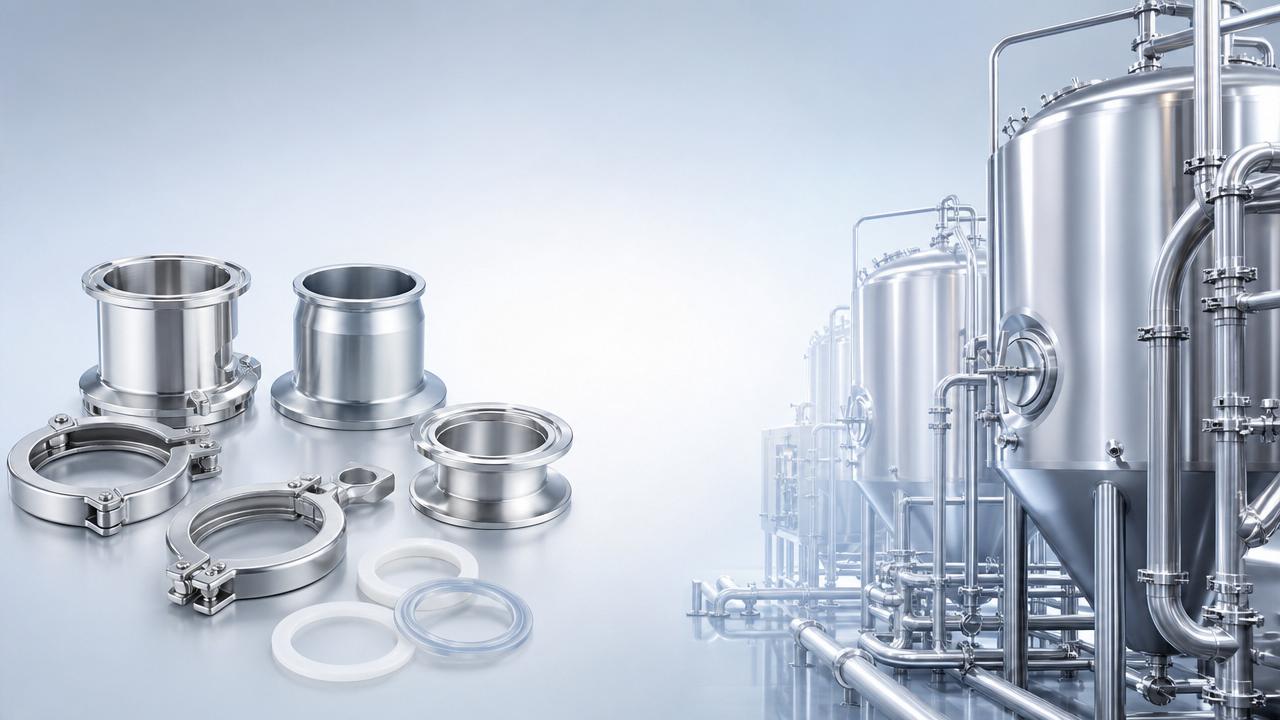
Selecting the right material for Brew Fittings directly affects system hygiene, corrosion resistance, pressure integrity, and long-term operating cost. For technical evaluators comparing stainless steel grades, sealing compatibility, surface finish, and compliance requirements, the choice is not only about durability but also about process reliability and product consistency. This guide reviews key material considerations for brewing and fermentation systems, helping breweries, kombucha producers, and equipment specifiers make informed decisions based on real operating conditions, sanitation demands, and international quality standards.
In beer and kombucha production, Brew Fittings are small components with large consequences. A poorly selected clamp, ferrule, valve connection, gasket groove, or hose adaptor can create dead legs, leakage points, cleaning failures, or premature corrosion within 6–18 months of operation.
For technical evaluators, the material question should be linked to process temperature, pH range, chloride exposure, pressure rating, cleaning method, and regulatory expectations. The most economical option is rarely the cheapest fitting; it is the one that maintains hygienic performance across repeated production cycles.
Why Material Selection Matters for Brew Fittings
Brew Fittings connect tanks, pumps, heat exchangers, filters, carbonation systems, CIP loops, and packaging lines. In a typical 10 hL–50 hL brewhouse, dozens or hundreds of sanitary connections may be exposed to hot wort, acidic beer, caustic wash, and sanitizing agents every week.
The main risk is not only visible failure. Micro-pitting, rough internal surfaces, incompatible seals, and poorly matched metals can reduce cleanability long before a component leaks. That risk is especially important in fermentation systems where contamination may affect an entire batch.
Core Evaluation Criteria
A robust material review normally includes at least 6 criteria: corrosion resistance, hygienic design, pressure tolerance, thermal stability, seal compatibility, and documentation traceability. These points help compare Brew Fittings beyond basic purchase price.
- Check whether the fitting will contact product, steam, glycol, cleaning chemicals, or compressed gas.
- Confirm the expected operating temperature, often from 0°C–100°C in brewing service and higher in steam-assisted cleaning.
- Review pressure requirements, including pump discharge, carbonation pressure, and pressure test values.
- Evaluate whether the surface finish supports CIP cleaning and prevents residue accumulation.
Common Technical Pain Points
Technical teams often find problems after commissioning: gaskets swell after 3–6 CIP cycles, clamp joints drip under vibration, threaded parts trap soil, or low-grade metal discolors near chloride-rich cleaning water. These issues usually come from incomplete material matching.
For turnkey projects, fitting material should be reviewed together with tank material, pipeline layout, pump selection, valve type, and cleaning procedure. Carry Brewtech typically approaches these details as part of customized brewing, fermentation, chilling, and kombucha system design.
Stainless Steel Grades Used in Brew Fittings
Stainless steel is the preferred material for most sanitary Brew Fittings because it combines strength, cleanability, and corrosion resistance. However, different grades behave differently under acidic, alkaline, chloride, and high-temperature conditions.
The 2 most common choices are 304 and 316L stainless steel. For breweries using aggressive cleaning regimes, salty water, acidic fruit additions, or kombucha fermentation, the difference between these grades can affect service life and maintenance frequency.
304 vs 316L Stainless Steel
The following comparison summarizes practical differences for technical evaluators. Actual suitability should still be confirmed against local water chemistry, CIP recipe, pressure class, and product contact requirements.
For most breweries, 304 stainless steel can be technically sufficient in many low-risk zones. For acidic fermentation, carbonation, kombucha systems, and frequent CIP exposure, 316L Brew Fittings often provide a better balance of hygiene, durability, and risk control.
Surface Finish and Passivation
Material grade alone is not enough. Surface roughness, weld quality, and passivation affect whether Brew Fittings are easy to clean. Hygienic product-contact surfaces commonly target smooth finishes, often expressed by Ra values such as 0.8 μm or better depending on specification.
Passivation helps restore the chromium oxide layer after machining or welding. Technical evaluators should ask whether fittings are pickled, passivated, polished, or electropolished, especially when they are installed in fermentation and beverage contact zones.
Seal, Gasket, and Compatibility Considerations
A stainless body may perform well, but Brew Fittings can still fail if the gasket material is wrong. Seal selection must consider wort temperature, beer acidity, kombucha organic acids, oxygen sensitivity, caustic concentration, and sanitizer exposure.
In many plants, seals are replaced more frequently than metal parts. A practical maintenance plan may inspect gaskets every 1–3 months and replace critical seals during scheduled shutdowns, depending on usage intensity and chemical exposure.
Typical Gasket Material Options
The table below compares common gasket materials used with sanitary Brew Fittings. These ranges are general references; final selection should follow supplier data sheets and actual process validation.
The key conclusion is that gasket choice should follow the most aggressive exposure, not only the normal product condition. For example, a fitting used at 20°C beer transfer may still face 70°C–85°C cleaning cycles and concentrated chemicals.
Compression and Installation Risk
Over-tightened clamps can deform gaskets and create intrusion into the product path. Under-tightened clamps may leak during pump start-up or carbonation pressure changes. A repeatable installation procedure helps protect both seal life and batch integrity.
For critical Brew Fittings, technical teams should document gasket material, batch traceability, inspection interval, and replacement date. This practice supports quality audits and reduces troubleshooting time during production deviations.
Pressure, Temperature, and Process Environment
Brew Fittings are exposed to changing mechanical loads. Pump vibration, thermal expansion, CO2 pressure, cleaning turbulence, and manual hose handling can all influence joint integrity. Evaluators should assess normal conditions and worst-case operating scenarios.
A fitting that works at low pressure in an open transfer line may not be suitable for carbonation systems. Beer and kombucha carbonation can require stable sealing under repeated pressure cycles, often in the range of 1–4 bar depending on process design.
4 Operating Conditions to Verify
- Maximum working pressure and test pressure for each pipeline or vessel connection.
- Temperature range during production, cleaning, sterilization, and standby conditions.
- Chemical exposure, including caustic, acid wash, peracetic acid, and chlorine-based risks.
- Mechanical stress from hose movement, vibration, operator handling, and frequent disassembly.
If a brewery runs 2–4 production shifts per day, fittings may be connected, cleaned, and inspected far more often than in a pilot plant. Higher cycle frequency usually favors more durable materials, better clamps, and standardized spare parts.
Dead Legs and Hygienic Geometry
Material choice should be paired with hygienic geometry. Long threads, internal crevices, mismatched ferrules, and oversized reducers can create stagnant zones. Even 316L stainless steel cannot compensate for a design that is difficult to clean.
As a practical rule, technical evaluators should reduce unnecessary adaptors and prefer direct sanitary connections where possible. A cleaner layout lowers the number of joints, shortens CIP validation time, and simplifies operator training.
Compliance, Documentation, and Quality Control
For B2B procurement, Brew Fittings should support not only mechanical performance but also documentation needs. Technical files, material certificates, pressure-related declarations, drawings, and inspection records may be required for internal approval.
Carry Brewtech designs and manufactures equipment according to customer requirements, with solutions aligned to CE and PED expectations where applicable. Production and quality control processes follow European and American quality practices, supported by ISO 9001 audited quality management.
Procurement Checklist for Technical Evaluation
Before purchase approval, evaluators can use a 7-point checklist to compare sanitary fittings consistently across suppliers, projects, and regional compliance expectations.
- Confirm stainless grade, such as 304 or 316L, for every product-contact Brew Fittings item.
- Request surface finish information and check whether polishing or passivation is specified.
- Verify gasket material, chemical compatibility, and replacement availability.
- Review pressure and temperature ratings against the most demanding operating condition.
- Check dimensional standards to avoid mismatch during installation and maintenance.
- Confirm documentation such as material certificates, drawings, and inspection records.
- Evaluate spare part strategy for 12–24 months of operation, especially for gaskets and clamps.
Dimensional Consistency
Dimensional inconsistency can create gasket pinch, poor alignment, or leakage during pressure cycling. For imported or multi-supplier systems, confirm whether fittings follow the same sanitary standard and clamp connection geometry.
This is particularly important when expanding a brewhouse after 2–3 years. Standardized Brew Fittings reduce installation time, simplify inventory, and make future process upgrades more predictable.
Application-Based Material Recommendations
Different zones in a brewery or kombucha plant do not always require the same material strategy. A cost-effective design may use 304 in suitable utility or low-risk process areas while selecting 316L for demanding product-contact points.
The goal is not over-specification. The goal is rational specification based on exposure, sanitation, batch value, and failure consequence. A 1-hour leakage repair in a utility line is different from contamination in a fermentation tank.
Recommended Selection by System Area
The following guide provides practical direction for matching Brew Fittings materials with common brewing and fermentation areas. It can be adapted for craft breweries, production breweries, pilot plants, and kombucha facilities.
This zone-based approach supports cost control without compromising critical hygiene. It also helps procurement teams compare quotations more accurately, because two offers may look similar while using different materials in high-risk contact points.
Common Mistakes When Comparing Brew Fittings
Many specification errors occur because fittings are treated as generic accessories. In reality, they are part of the process boundary. A single incorrect adaptor can affect cleaning flow, product recovery, oxygen pickup, or operator safety.
Technical evaluators should review drawings and bills of materials together. A comparison based only on unit price may miss 3 hidden cost drivers: downtime, spare part complexity, and premature replacement.
Avoid These 5 Specification Errors
- Selecting 304 stainless steel for highly acidic or chloride-rich product contact without risk review.
- Using mixed gasket materials without a clear chemical compatibility matrix.
- Ignoring surface finish and assuming all stainless fittings are equally hygienic.
- Installing threaded or crevice-prone parts in zones that require regular CIP cleaning.
- Buying non-standard components that are difficult to replace within 7–15 days when production is running.
Lifecycle Cost Perspective
A lower-cost fitting may save a small amount during procurement but increase labor and production risk over 12 months. If a gasket failure causes one batch hold, the operational cost can exceed the price difference of upgraded Brew Fittings.
A better comparison includes purchase cost, installation labor, inspection time, cleaning validation effort, spare inventory, and expected replacement cycle. This full-cost view is more useful for breweries planning long-term capacity growth.
How Carry Brewtech Supports Technical Evaluation
Established in 2017, Carry Brewtech supplies beer brewing equipment, fermentation systems, chilling systems, kombucha brewing equipment, carbonation systems, and customized turnkey projects to customers in more than 30 countries.
For Brew Fittings selection, the practical value lies in aligning small components with the larger process design. Material, seal, pressure, cleaning, and compliance requirements should be confirmed before fabrication, shipment, and commissioning.
A Practical 5-Step Review Process
- Define process media, including beer, wort, kombucha, water, glycol, steam, CO2, and CIP chemicals.
- Identify product-contact and non-product-contact zones across tanks, pipelines, valves, and utilities.
- Select stainless steel grade and gasket material according to the highest-risk exposure.
- Confirm drawings, dimensions, surface finish, and pressure-related requirements before production.
- Prepare spare parts and maintenance guidance for commissioning and routine operation.
This review helps reduce rework, clarify supplier responsibility, and make technical decisions transparent for purchasing, engineering, quality, and operations teams. It is especially useful for breweries expanding from pilot scale to commercial capacity.
Best Fit for Technical Buyers
The strongest material specification is application-specific. Technical buyers should choose Brew Fittings that match sanitation demands, pressure duty, fluid chemistry, and international quality expectations rather than relying on a single default grade.
For beer and kombucha producers, 316L stainless steel and validated gasket materials are often the safer choice in critical product-contact areas. 304 stainless steel can remain practical in appropriate zones when exposure is well understood.
Carry Brewtech can support customized equipment planning, material review, and turnkey system configuration for breweries and kombucha producers seeking reliable, cost-effective process solutions. To discuss Brew Fittings, fermentation systems, chilling integration, or a complete project layout, contact us to get a customized solution and consult product details.
Quick Links
- ▶ Kombucha Brew Safety Mistakes
- ▶ Kombucha Brew Market Trends 2026
- ▶ Kombucha Brew Equipment Selection
- ▶ Kombucha Brew Cost and Yield Basics
- ▶ Auxiliaries That Improve Brew Stability
- ▶ Auxiliaries Maintenance Warning Signs
- ▶ How to Budget for Auxiliaries
- ▶ Auxiliaries Selection for Small Breweries
- ▶ Auxiliaries and Production Downtime Risk
- ▶ Brew Fittings Material Comparison
Message
Send Your Inquiry
We welcome your cooperation and we will develop with you.