
Auxiliaries and Production Downtime Risk
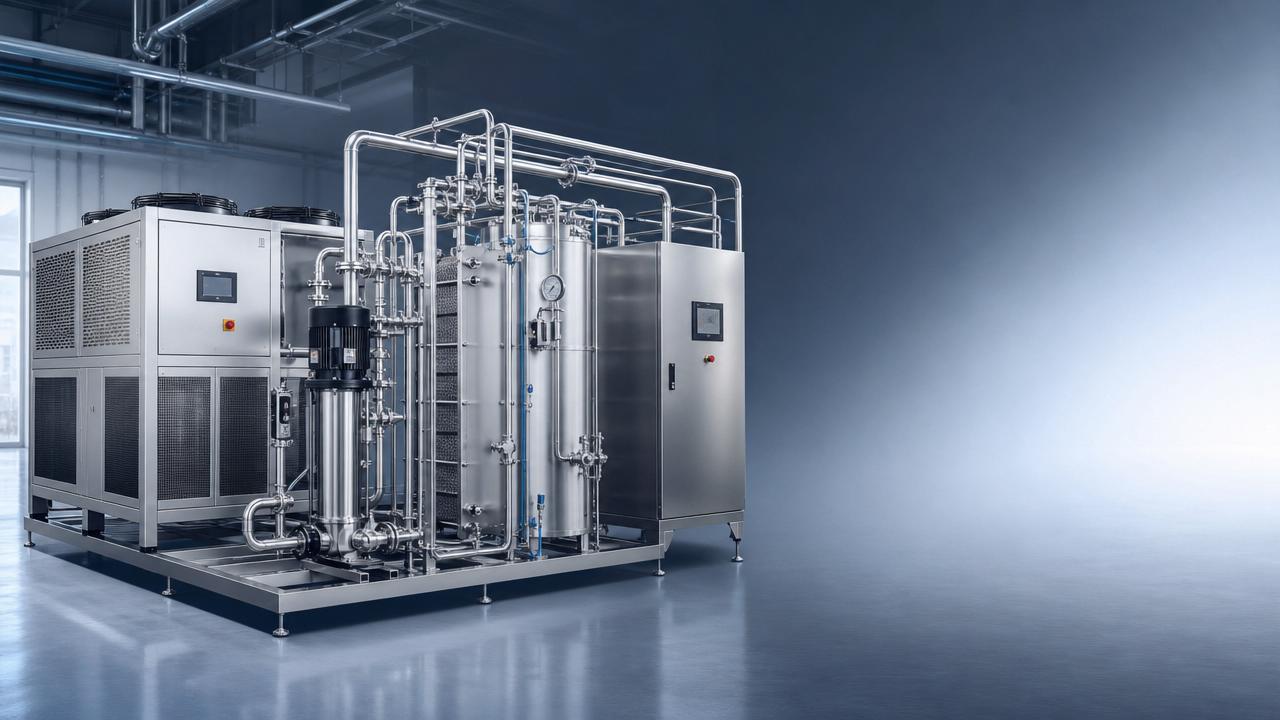
In brewing and beverage production, Auxiliaries are often the hidden factor behind uptime, efficiency, and product consistency. For enterprise decision makers, overlooking chilling units, fermentation support systems, carbonation modules, pumps, controls, and utility connections can turn a well-designed brewhouse into a source of costly delays. Understanding how auxiliary equipment affects production downtime risk helps breweries, kombucha producers, and beverage manufacturers make smarter investment decisions, improve reliability, and protect long-term profitability.
For many production teams, downtime is not caused by the mash tun, fermenter, or bright tank itself. It often starts with undersized cooling, unstable pressure, poor automation logic, or a pump that cannot maintain the required flow for 2 consecutive production shifts.
Carry Brewtech supports breweries and beverage producers with brewing systems, fermentation systems, chilling systems, carbonation systems, kombucha equipment, and turnkey projects. In these projects, Auxiliaries must be engineered as part of the complete production chain, not treated as secondary accessories.
Why Auxiliaries Carry Strategic Downtime Risk
Auxiliaries include the equipment and utility interfaces that support brewing, fermentation, cooling, transfer, cleaning, carbonation, and control. They rarely attract attention during a site visit, yet they decide whether production runs smoothly for 8, 12, or 24 hours.
A brewhouse may be designed for 10 hl, 20 hl, or 50 hl per batch, but that capacity is only achievable when auxiliary systems can keep pace. Cooling, pumping, steam, compressed air, and control cabinets must match the real production schedule.
The hidden link between support systems and lost batches
When a glycol chiller cannot pull down fermentation temperature within the expected window, yeast performance changes. When a transfer pump cavitates, dissolved oxygen risk increases. When sensors drift by 1℃–2℃, recipe repeatability becomes harder to defend.
For enterprise decision makers, the issue is financial rather than purely technical. One delayed tank can block downstream scheduling, postpone packaging, disrupt distribution commitments, and reduce available cash flow for the next 1–3 weeks.
Typical auxiliary-related downtime sources
- Chilling capacity below peak fermentation or crash-cooling demand.
- Incorrect pump selection for flow rate, head pressure, viscosity, or sanitation duty.
- Carbonation modules that cannot maintain stable pressure and CO2 absorption.
- Control systems without alarms, interlocks, or clear operating permissions.
- Utility connections designed without allowance for 15%–25% future expansion.
These risks are manageable when Auxiliaries are specified during the process design stage. They become expensive when corrected after installation, especially if piping, electrical capacity, or floor layout must be modified.
Key Auxiliary Systems That Protect Production Uptime
Not every plant needs the same auxiliary configuration. A craft brewery, kombucha producer, and multi-product beverage factory may share similar utilities, but their peak loads, hygiene risks, and automation priorities differ significantly.
The following table summarizes core Auxiliaries that should be reviewed before equipment purchase, layout approval, or capacity expansion. It is especially useful during a 3-stage project evaluation: design, procurement, and commissioning.
The key conclusion is simple: Auxiliaries must be sized against the most demanding operating condition, not the average day. Peak loads usually appear during simultaneous fermentation cooling, CIP, transfer, and packaging preparation.
Chilling systems: the most common bottleneck
Cooling demand changes across the production cycle. Wort cooling, fermentation temperature control, cold crash, and storage all compete for refrigeration capacity. A common design mistake is calculating only one operating mode.
For example, a facility operating 6–12 fermentation tanks may require different glycol reservoir sizing than a single-tank pilot line. Ambient conditions above 30℃ also increase compressor workload and should be considered early.
Pumps, valves, and piping: small components, large consequences
Incorrect pump selection can add 20–40 minutes to each transfer or cleaning cycle. Across 2 batches per day, this delay can consume a full operating shift within one week.
Sanitary design also matters. Dead legs, difficult-to-drain pipe sections, and unsuitable gaskets may not stop production immediately, but they increase cleaning complexity and raise product quality risk over time.
How Decision Makers Should Evaluate Auxiliary Investment
Enterprise buyers often compare main tank volume, stainless steel thickness, automation level, and price. Those factors matter, but Auxiliaries determine whether the system can operate at planned capacity after installation.
A practical evaluation should combine engineering data, production planning, service expectations, and compliance requirements. The goal is not to buy the most complex system, but the most appropriate configuration.
A 6-point purchasing checklist
- Define current batch size, annual output target, and expansion plan for the next 2–5 years.
- Calculate peak cooling, transfer, CIP, and packaging support demand, not only daily averages.
- Confirm local utility limits, including voltage, phase, water pressure, drainage, and air supply.
- Review hygiene requirements for beer, kombucha, low-alcohol beverages, or mixed product lines.
- Ask for commissioning steps, operator training scope, and spare parts recommendations.
- Evaluate supplier experience with CE, PED, ISO 9001 processes, and international delivery coordination.
This checklist helps procurement teams move beyond unit price. A lower initial cost may become expensive if the plant loses 3–5 production days during peak season because auxiliary capacity was underestimated.
Total cost of ownership matters
Auxiliary investment should be judged over the equipment lifecycle. Energy consumption, maintenance interval, spare part availability, and cleaning time can affect cost more than the first quotation difference.
For many beverage producers, a 5%–10% higher initial investment in reliable Auxiliaries may be justified if it prevents emergency downtime, urgent freight, overtime labor, and product rework.
Designing Auxiliaries for Beer, Kombucha, and Beverage Lines
Beer brewing and kombucha production share some support needs, but process risks differ. Beer typically emphasizes precise fermentation temperature, yeast management, CIP, and carbonation stability. Kombucha often requires careful fermentation control and food-grade carbonation handling.
Carry Brewtech designs and manufactures equipment according to customer requirements, with attention to CE and PED compliance where applicable. This approach allows auxiliary planning to be aligned with local standards and real production goals.
The following comparison helps decision makers identify which Auxiliaries deserve priority in different production environments. It also supports internal discussion between owners, plant managers, technical teams, and finance departments.
The table shows that auxiliary design is not a universal checklist. The right answer depends on product type, capacity target, market destination, operator skill level, and the expected payback period.
Turnkey planning reduces interface risk
In a fragmented purchase, one supplier provides tanks, another provides cooling, and a local contractor connects utilities. This can work, but it creates interface risk between 3 or more responsible parties.
A turnkey approach reduces ambiguity by coordinating process layout, equipment sizing, utility connection points, documentation, and commissioning sequence. It is particularly valuable for international buyers managing schedules across time zones.
Implementation, Maintenance, and Service Planning
Even well-designed Auxiliaries require disciplined implementation. A project should include design confirmation, manufacturing review, factory inspection, shipment preparation, installation support, and commissioning validation.
For typical brewing and beverage equipment projects, decision makers should allow several structured milestones rather than treating delivery as the final step. Each milestone reduces the chance of downtime after start-up.
A practical 5-step auxiliary deployment process
- Process review: confirm batch volume, production frequency, product types, and expected operating hours.
- Utility audit: check power supply, cooling water, glycol loop, steam, air, drainage, and site limitations.
- Engineering alignment: match Auxiliaries with tanks, valves, controls, cleaning requirements, and automation logic.
- Pre-shipment inspection: verify key components, documentation, pressure-related items, and packing details.
- Commissioning support: test cooling, transfer, carbonation, alarms, cleaning cycles, and operator procedures.
This process is not complicated, but it demands coordination. A missed utility detail can delay installation by 7–15 days, especially when replacement parts or electrical modifications are required.
Maintenance habits that reduce unplanned stoppage
Auxiliary maintenance should be scheduled before failures occur. Pumps, seals, temperature probes, pressure gauges, solenoid valves, filters, and glycol concentration should be checked at defined intervals.
A practical schedule may include weekly visual checks, monthly functional tests, quarterly calibration review, and annual deeper inspection. The exact interval depends on production intensity and sanitation requirements.
Operator training is part of risk control
Downtime is not always mechanical. Operators need to understand alarm meanings, cleaning routes, valve positions, safe pressure limits, and start-stop sequences. Clear procedures reduce human error during busy production windows.
For new teams, training should cover at least 3 areas: daily operation, troubleshooting, and sanitation. For expanding plants, refresher training is useful when new Auxiliaries are integrated.
Common Mistakes That Increase Downtime Exposure
Many downtime risks begin during procurement, not operation. When auxiliary systems are reduced to save capital expenditure, the effect may not appear until production reaches 70%–90% of planned capacity.
The most costly mistake is assuming that all auxiliary equipment is interchangeable. In reality, a pump, chiller, control valve, or carbonation skid must fit process conditions and sanitation expectations.
Mistake 1: sizing for today only
A system sized only for the first 6 months may restrict growth. If tank expansion is likely, utility headers, cooling loops, and control capacity should allow reasonable future connection.
Mistake 2: separating equipment price from installation reality
A lower equipment price may hide higher installation cost. Poorly defined connection points, missing documentation, or incompatible voltage can create urgent site work before the first batch starts.
Mistake 3: ignoring documentation and compliance
Documentation matters for international projects. Drawings, pressure equipment information, electrical references, and operating manuals help local teams install, inspect, and maintain the system with fewer delays.
Carry Brewtech’s experience serving customers in more than 30 countries supports this need for structured coordination. International buyers benefit when equipment design, quality control, and service communication are aligned early.
Choosing a Supplier for Reliable Auxiliaries
A strong auxiliary supplier should understand brewing technology, beverage processing, international standards, and after-sales service. Decision makers should ask how the supplier validates design assumptions before manufacturing begins.
Established in 2017, Carry Brewtech focuses on research, development, sales, and service for beer brewing equipment, fermentation systems, chilling systems, kombucha equipment, carbonation systems, and customized turnkey projects worldwide.
What to discuss before placing an order
- Expected daily and weekly production rhythm, including peak-season demand.
- Required tank quantities, batch sizes, cooling profiles, and transfer distances.
- Local certification needs, including CE or PED considerations where applicable.
- Factory layout constraints, ceiling height, drainage, and maintenance access.
- Spare parts strategy for critical Auxiliaries such as pumps, sensors, seals, and controls.
These conversations should happen before final layout approval. Changes after fabrication can add cost, extend delivery, or force compromises that affect daily production efficiency.
Why customized engineering supports profitability
Customized engineering does not mean unnecessary complexity. It means matching Auxiliaries to the real product, facility, operators, regulations, and growth plan, while avoiding overbuilding where it does not create value.
Carry Brewtech operates with ISO 9001-certified quality management and production practices aligned with European and American quality expectations. For enterprise buyers, this supports consistency in equipment fabrication and project communication.
Turning Auxiliary Planning into Competitive Advantage
Auxiliaries are not background equipment. They are the operational backbone that protects fermentation control, carbonation consistency, cleaning effectiveness, packaging readiness, and planned production output.
For breweries, kombucha producers, and beverage manufacturers, the best downtime strategy is preventive design. Review cooling, pumping, controls, utilities, sanitation, and service support before the purchase order is finalized.
Carry Brewtech helps global customers develop cost-effective brewing and beverage equipment solutions based on specific production needs. From standalone Auxiliaries to customized turnkey projects, the focus remains reliability, practicality, and long-term value.
If your team is planning a new facility, capacity expansion, or auxiliary upgrade, contact Carry Brewtech to discuss product details, review your process requirements, and obtain a customized solution for your production goals.
Quick Links
- ▶ Kombucha Brew Safety Mistakes
- ▶ Kombucha Brew Market Trends 2026
- ▶ Kombucha Brew Equipment Selection
- ▶ Kombucha Brew Cost and Yield Basics
- ▶ Auxiliaries That Improve Brew Stability
- ▶ Auxiliaries Maintenance Warning Signs
- ▶ How to Budget for Auxiliaries
- ▶ Auxiliaries Selection for Small Breweries
- ▶ Auxiliaries and Production Downtime Risk
- ▶ Brew Fittings Material Comparison
Message
Send Your Inquiry
We welcome your cooperation and we will develop with you.