
Auxiliaries That Improve Brew Stability
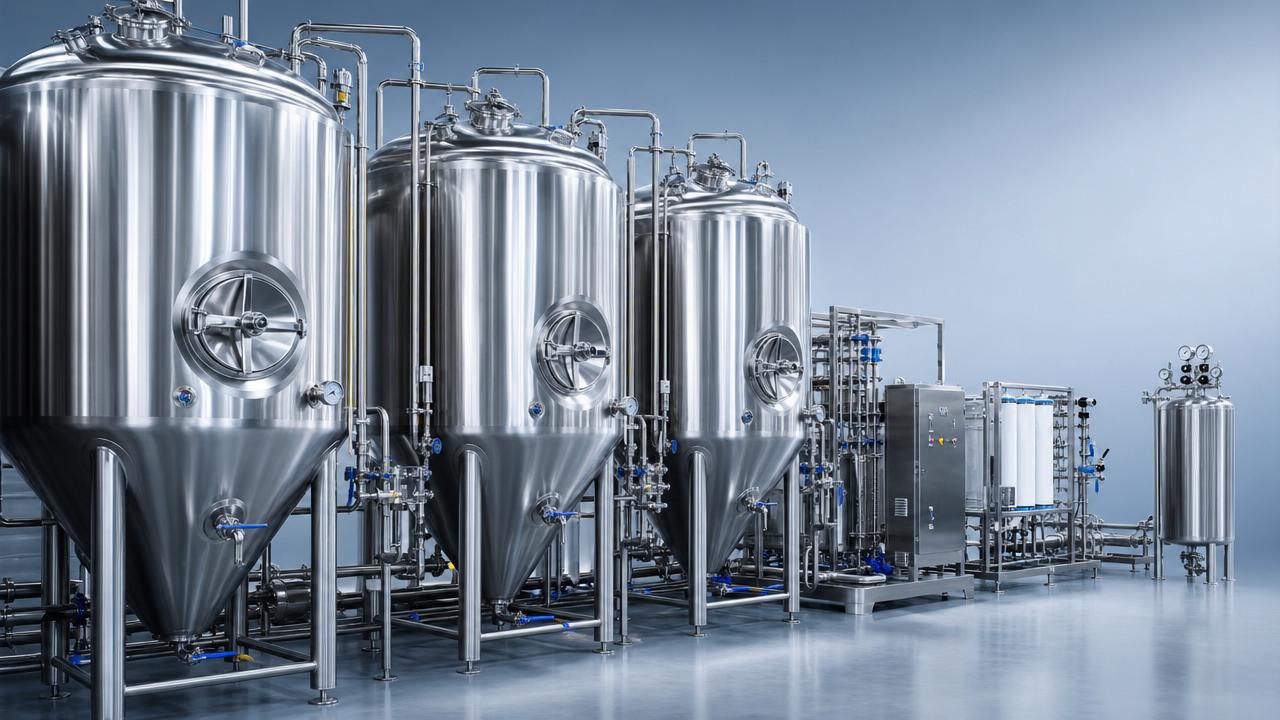
For technical evaluators, brew stability depends not only on core brewhouse and fermentation equipment, but also on the right Auxiliaries that support temperature control, carbonation consistency, filtration efficiency, and sanitary operation.
In modern beer and kombucha production, these auxiliary systems directly influence product quality, batch repeatability, energy use, and long-term operational reliability.
This article explains how well-designed brewing Auxiliaries reduce process risks and support scalable, standards-compliant production for demanding commercial applications.
Auxiliaries That Improve Brew Stability: What Do They Actually Do?
Brewing Auxiliaries are supporting systems that keep the main process stable, measurable, and repeatable from wort production to packaging preparation.
They may not be the visible centerpiece of a brewery, yet they often decide whether each batch remains consistent.
Typical Auxiliaries include glycol chilling units, carbonation stones, CIP systems, pumps, filtration modules, water treatment, yeast handling, and process controls.
For beer, they help protect flavor, foam quality, dissolved oxygen control, and fermentation temperature stability.
For kombucha, they support controlled fermentation, stable carbonation, hygienic transfers, and product consistency across variable botanical recipes.
A brewhouse can be well built, but weak Auxiliaries may still cause temperature drift, microbial risk, or inconsistent carbonation.
That is why auxiliary design should be considered early, not added as an afterthought during installation.
Which Auxiliaries Have the Biggest Impact on Temperature Stability?
Temperature control is one of the most important factors in brew stability, especially during fermentation and cold conditioning.
Fermentation generates heat, and uncontrolled heat can change yeast behavior, acid development, aroma formation, and final attenuation.
Glycol chilling systems are core Auxiliaries because they remove heat from fermenters, bright tanks, and kombucha maturation tanks.
A stable glycol loop requires proper chiller capacity, pump sizing, insulation, tank jacket design, and temperature sensor placement.
If the chiller is undersized, fermentation temperatures may rise during peak activity and reduce batch predictability.
If the system is oversized without control logic, short cycling may increase energy use and equipment wear.
Useful temperature-related Auxiliaries include:
- Glycol chillers matched to tank count and production schedule.
- Insulated glycol piping to reduce thermal loss.
- Automated valves for precise tank temperature control.
- Reliable sensors with accessible calibration points.
- Control panels that allow recipe-based temperature profiles.
When these Auxiliaries are integrated correctly, each tank can follow a defined thermal curve with fewer manual adjustments.
How Do Auxiliaries Improve Carbonation Consistency?
Carbonation stability affects mouthfeel, aroma lift, foam behavior, package pressure, and consumer perception of freshness.
In beer and kombucha, inconsistent carbonation often comes from unstable temperature, poor gas dispersion, or inadequate pressure control.
Carbonation Auxiliaries include carbonation stones, CO₂ manifolds, pressure regulators, inline carbonation skids, and tank pressure relief devices.
A well-selected carbonation stone creates fine bubbles that dissolve efficiently into cold liquid under controlled pressure.
For larger systems, inline carbonation Auxiliaries can reduce tank hold time and improve batch-to-batch repeatability.
Kombucha carbonation requires extra attention because residual sugars, acidity, and microbial activity may influence pressure development.
Sanitary gas lines and food-grade components are essential, especially where sweetened or flavored products are handled.
Important checks include gas purity, regulator accuracy, tank pressure rating, and compatibility with cleaning procedures.
The goal is not simply adding CO₂, but achieving controlled absorption without over-foaming or oxygen pickup.
What Role Do Filtration and Clarification Auxiliaries Play?
Filtration and clarification Auxiliaries help stabilize appearance, remove suspended solids, and prepare liquid for packaging or further conditioning.
Beer may require clarification to control haze, yeast carryover, hop particles, and sediment formation during storage.
Kombucha may need gentle clarification, especially when products contain tea solids, fruit pulp, herbs, or post-fermentation additions.
Common Auxiliaries include cartridge filters, lenticular filters, plate filters, transfer pumps, sight glasses, and sanitary hoses.
The correct choice depends on product style, desired clarity, microbial requirements, and allowable flavor impact.
Over-filtration can strip desirable aroma compounds or alter mouthfeel, especially in expressive beer styles.
Under-filtration can create sediment, shorter shelf life, or inconsistent package appearance.
Pump selection also matters because excessive shear may disturb product texture or increase dissolved oxygen exposure.
Stable filtration depends on balanced flow rate, pressure drop monitoring, media compatibility, and sanitary design.
How Do Sanitary Auxiliaries Reduce Contamination Risk?
Sanitation is a stability issue, not only a cleaning task.
Microbial contamination can change flavor, acidity, carbonation, aroma, and shelf performance within a short time.
CIP systems are among the most valuable Auxiliaries for commercial breweries and kombucha facilities.
They circulate cleaning solutions through tanks, pipes, valves, heat exchangers, and transfer paths without unnecessary disassembly.
A strong CIP design controls four factors: chemical concentration, temperature, contact time, and mechanical action.
Sanitary Auxiliaries also include spray balls, sanitary pumps, tri-clamp fittings, valve clusters, drain points, and cleanable hoses.
Poor drainage is a common hidden risk because standing liquid can become a contamination source.
Dead legs, rough welds, unsuitable gaskets, and difficult-to-clean corners should be avoided during equipment selection.
Carry Brewtech designs brewing equipment and related Auxiliaries with attention to sanitary operation, CE compliance, and PED requirements when applicable.
How Should Brewing Auxiliaries Be Selected for Scalable Production?
Scalability requires more than buying larger tanks.
The supporting Auxiliaries must match future production volume, cleaning frequency, recipe diversity, and packaging rhythm.
A system designed only for current demand may become a bottleneck after sales growth or new product launches.
Key selection factors include:
- Production targets for daily, weekly, and seasonal output.
- Number of fermenters, brite tanks, and kombucha tanks.
- Expected fermentation temperature ranges and crash cooling needs.
- Cleaning cycles, chemical usage, and water availability.
- Carbonation method, product pressure, and packaging requirements.
- Local certification, safety, and installation standards.
Modular Auxiliaries are often helpful because they allow phased expansion without replacing the entire production platform.
However, modular planning still requires correct utility sizing, floor layout, piping routes, and electrical capacity.
Customized turnkey planning can reduce compatibility issues between brewhouse equipment, fermentation systems, chilling systems, and cleaning circuits.
FAQ and Decision Table for Brewing Auxiliaries
The following table summarizes common questions when evaluating Auxiliaries for beer or kombucha production.
This table should be used as an early screening tool, not as a replacement for technical sizing.
Final auxiliary selection should consider process data, tank geometry, local utilities, floor space, and production schedule.
What Mistakes Should Be Avoided When Planning Auxiliaries?
One common mistake is focusing budget only on tanks while underestimating supporting systems.
Another mistake is choosing Auxiliaries without checking installation space, access points, drainage, and maintenance clearance.
Some facilities also overlook water treatment, even though brewing water strongly affects flavor and cleaning performance.
Inadequate instrumentation is another hidden issue.
Without accurate temperature, pressure, and flow readings, operators cannot identify process drift early.
Cheap components may reduce initial cost, but they can increase downtime, leakage, energy waste, and sanitation failures.
Reliable Auxiliaries should be easy to clean, easy to service, and compatible with established production standards.
Documentation also matters, including wiring diagrams, operating procedures, spare parts lists, and cleaning recommendations.
Why Work With Carry Brewtech for Brewing Auxiliaries?
Established in 2017, Carry Brewtech supplies beer brewing equipment, fermentation systems, chilling systems, kombucha equipment, and customized turnkey projects worldwide.
The company develops Auxiliaries that integrate with process requirements rather than treating support equipment as separate accessories.
Equipment can be designed and manufactured according to CE and PED standards, depending on project requirements.
Production and quality control follow European and American quality expectations, supported by an ISO 9001 quality management system.
Carry Brewtech has served customers in more than 30 countries, including the United States, Canada, Australia, Germany, and South Korea.
Its project approach covers customized system planning, equipment integration, and timely service for commercial brewing and kombucha applications.
For stable production, the right Auxiliaries should support process control, sanitation, carbonation, energy efficiency, and long-term reliability.
Conclusion: How to Take the Next Step
Brew stability is built through complete system thinking.
Tanks, brewhouse vessels, and fermentation equipment need dependable Auxiliaries to maintain repeatable quality under real production conditions.
The best starting point is to define production volume, product types, cleaning needs, carbonation goals, and expansion expectations.
From there, auxiliary equipment can be sized and configured around actual operating demands.
Carry Brewtech can support tailored brewing and kombucha solutions with integrated Auxiliaries for stable, efficient, and standards-conscious production.
Share process requirements, tank plans, and target capacity to start building a practical auxiliary system roadmap.
Quick Links
- ▶ Kombucha Brew Safety Mistakes
- ▶ Kombucha Brew Market Trends 2026
- ▶ Kombucha Brew Equipment Selection
- ▶ Kombucha Brew Cost and Yield Basics
- ▶ Auxiliaries That Improve Brew Stability
- ▶ Auxiliaries Maintenance Warning Signs
- ▶ How to Budget for Auxiliaries
- ▶ Auxiliaries Selection for Small Breweries
- ▶ Auxiliaries and Production Downtime Risk
- ▶ Brew Fittings Material Comparison
Message
Send Your Inquiry
We welcome your cooperation and we will develop with you.