
Kombucha Brew Cost and Yield Basics
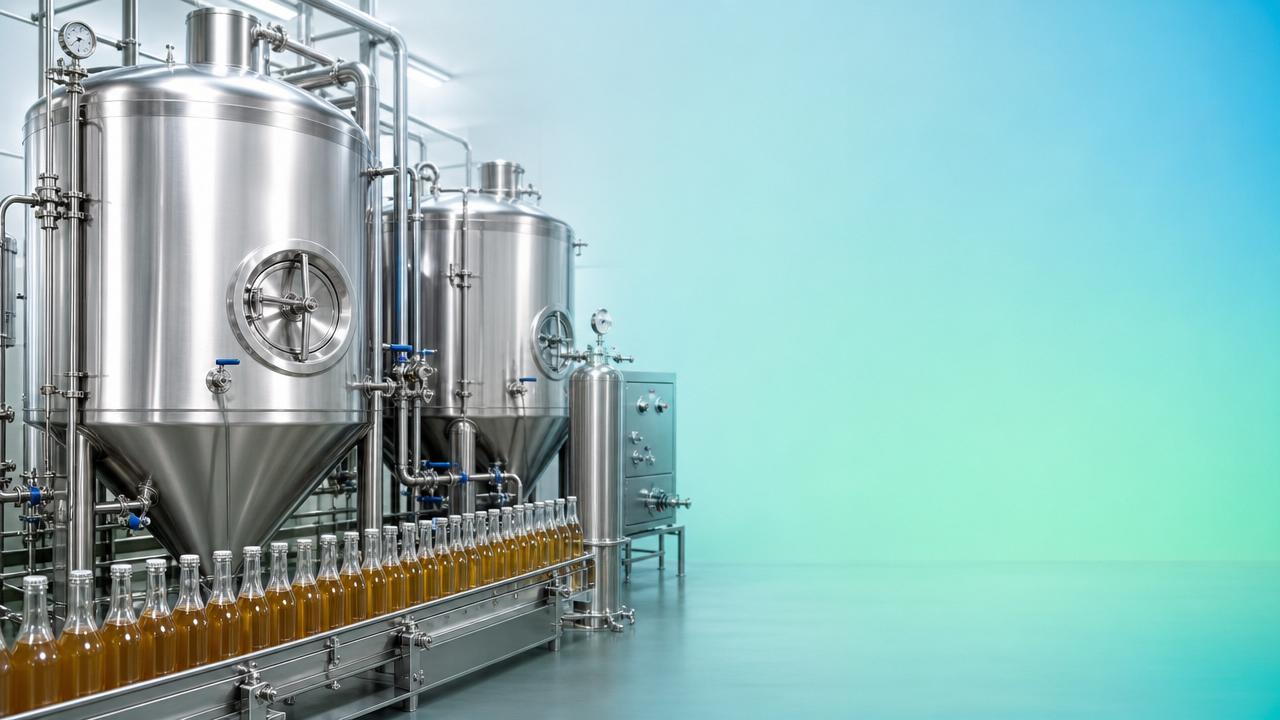
Every Kombucha Brew decision increasingly depends on controllable costs, predictable yield, and measurable return on investment.
Brewhouse sizing, fermentation capacity, chilling, carbonation, labor, utilities, and product loss all influence payback speed.
As commercial kombucha moves from niche shelves to broader beverage programs, cost visibility has become a competitive advantage.
A well-planned Kombucha Brew system helps stabilize output, reduce waste, and support growth without excessive equipment risk.
Kombucha Brew Economics Are Moving Toward Measurable Production Control
The market is no longer driven only by recipe creativity or brand storytelling.
Operators now compare batch yield, tank utilization, cooling load, carbonation consistency, and packaging loss before approving expansion.
This shift changes how Kombucha Brew projects are evaluated.
Small manual setups may appear inexpensive at first, but hidden costs often appear during scaling.
Inconsistent fermentation temperature, slow turnaround, excessive cleaning time, and unstable carbonation can reduce usable yield.
For commercial production, the real question is not only equipment price.
The stronger question is how much sellable product the system can produce reliably over time.
Current Cost Signals Are Reshaping Kombucha Brew Planning
Several cost signals are pushing producers to rethink Kombucha Brew capacity planning.
Ingredient prices, energy expenses, labor availability, packaging costs, and cold-chain requirements all affect production economics.
At the same time, retail channels expect consistent taste, stable carbonation, and dependable delivery schedules.
These pressures make yield forecasting more important than simple batch volume estimates.
These signals favor equipment decisions based on lifecycle value rather than lowest purchase cost.
A scalable Kombucha Brew layout can reduce expensive redesigns when demand increases.
Why Yield Has Become the Core Financial Variable
Yield is the bridge between production capacity and real revenue.
A 1,000-liter batch does not automatically create 1,000 liters of saleable kombucha.
Loss can occur during fermentation, filtration, transfers, carbonation, packaging, sampling, and quality rejection.
That makes net yield more useful than nominal batch size.
- Gross batch volume shows how much liquid enters production.
- Net yield shows how much finished product is available for sale.
- Yield percentage links equipment performance with margin performance.
- Repeatable yield supports better cash-flow planning.
For a Kombucha Brew operation, even small yield improvements can compound quickly.
Reducing a five percent loss to three percent can recover meaningful volume over many batches.
This recovered output often costs less than increasing tank capacity too early.
Key Cost Drivers Behind a Commercial Kombucha Brew System
Cost structure usually starts with equipment, but it does not end there.
A complete Kombucha Brew cost model should include capital expense and operating expense together.
Equipment and installation cost
Main equipment may include brewing vessels, fermentation tanks, chilling systems, carbonation units, pumps, piping, and controls.
Installation costs vary by layout, utilities, drainage, local compliance, and integration with packaging equipment.
Utilities and process energy
Heating water, cooling tanks, cleaning vessels, and maintaining cold storage all consume energy.
Efficient chilling design can lower cost per liter, especially when fermentation volume grows.
Labor and cleaning time
Manual handling may work at pilot scale, but it often limits throughput at commercial scale.
Cleaner piping paths, practical access points, and suitable CIP planning reduce labor burden.
Quality loss and batch risk
Temperature swings, contamination risk, oxygen exposure, and carbonation variation can create avoidable loss.
A controlled Kombucha Brew process protects both product quality and financial predictability.
Capacity Planning Is Shifting From Tank Count to System Balance
Adding tanks is not always the best way to increase output.
A system can be constrained by brewing speed, fermentation days, chilling capacity, carbonation rate, or packaging throughput.
Balanced design looks at the whole Kombucha Brew cycle.
- Estimate weekly finished product demand.
- Define realistic fermentation duration.
- Calculate required active fermentation volume.
- Include downtime for cleaning and turnover.
- Match chilling and carbonation capacity.
- Confirm packaging can handle finished volume.
This approach reduces stranded capacity.
It also prevents investment in oversized vessels that cannot be supported by utilities or packaging lines.
How Equipment Choices Affect Cost Per Liter
Cost per liter is one of the clearest comparison metrics for Kombucha Brew investment.
It combines ingredients, utilities, labor, depreciation, maintenance, packaging, and product loss.
The lowest equipment quote may not produce the lowest cost per liter.
Better insulation, sanitary design, pressure capability, and automation can improve long-term economics.
These features matter because Kombucha Brew profitability depends on repeatable output, not isolated batch success.
The Impact Across Production, Finance, and Market Growth
Cost and yield changes affect several parts of a beverage business.
Production teams gain clearer batch scheduling when equipment capacity aligns with fermentation time.
Finance planning improves when cost per liter and payback assumptions are based on realistic yield.
Sales planning also becomes stronger when supply reliability supports retail and distribution commitments.
- Stable yield supports accurate production forecasts.
- Controlled cooling improves flavor consistency.
- Efficient cleaning increases tank availability.
- Reliable carbonation supports premium product positioning.
- Scalable design reduces future expansion disruption.
A disciplined Kombucha Brew system can therefore support both operational control and commercial growth.
What Deserves Closer Attention Before Investment
Before selecting equipment, several assumptions should be tested carefully.
The goal is to avoid designs that look suitable on paper but struggle in daily operation.
- Target daily, weekly, and monthly finished volume.
- Expected fermentation time under controlled conditions.
- Projected yield loss at each process stage.
- Required carbonation level and packaging format.
- Available electrical, water, steam, and drainage capacity.
- Cleaning method, chemical use, and sanitation schedule.
- Expansion plan for the next two to five years.
These points turn Kombucha Brew planning into a measurable business case.
They also help compare different system proposals with fewer hidden variables.
A Practical Framework for Yield and Payback Decisions
A practical payback review should connect equipment cost with net production value.
The following framework supports clearer Kombucha Brew decision-making.
This framework keeps investment discussions tied to measurable outcomes.
It also highlights where a higher initial specification may reduce long-term operating cost.
How Carry Brewtech Supports Scalable Kombucha Brew Projects
Carry Brewtech was established in 2017 as a global supplier of brewing and fermentation equipment.
Its solutions cover beer brewing equipment, fermentation systems, chilling systems, kombucha equipment, carbonation systems, and turnkey projects.
For Kombucha Brew applications, system design can be customized around capacity targets, process needs, and site conditions.
Equipment can be manufactured in compliance with CE and PED standards when required.
Production and quality control follow European and American quality expectations.
Carry Brewtech has also passed audits for ISO 9001 certification.
Customers are located in more than 30 countries, including the United States, Canada, Australia, Germany, and the United Kingdom.
This international project experience supports practical planning for different compliance, utility, and installation environments.
Next Steps for Lower-Risk Kombucha Brew Investment
The strongest next step is to build a basic cost and yield model before equipment selection.
Start with target finished volume, expected fermentation days, ingredient cost, labor time, utilities, and packaging loss.
Then compare equipment options by cost per liter, expansion flexibility, cleaning efficiency, and quality control.
A well-designed Kombucha Brew project should protect margin today while leaving room for future demand.
Carry Brewtech can help evaluate brewhouse sizing, fermentation capacity, chilling, carbonation, and turnkey layout requirements.
With clear assumptions and suitable equipment design, Kombucha Brew growth becomes easier to measure, finance, and scale.
Quick Links
- ▶ Kombucha Brew Safety Mistakes
- ▶ Kombucha Brew Market Trends 2026
- ▶ Kombucha Brew Equipment Selection
- ▶ Kombucha Brew Cost and Yield Basics
- ▶ Auxiliaries That Improve Brew Stability
- ▶ Auxiliaries Maintenance Warning Signs
- ▶ How to Budget for Auxiliaries
- ▶ Auxiliaries Selection for Small Breweries
- ▶ Auxiliaries and Production Downtime Risk
- ▶ Brew Fittings Material Comparison
Message
Send Your Inquiry
We welcome your cooperation and we will develop with you.