
Brew Fittings Cost vs Durability
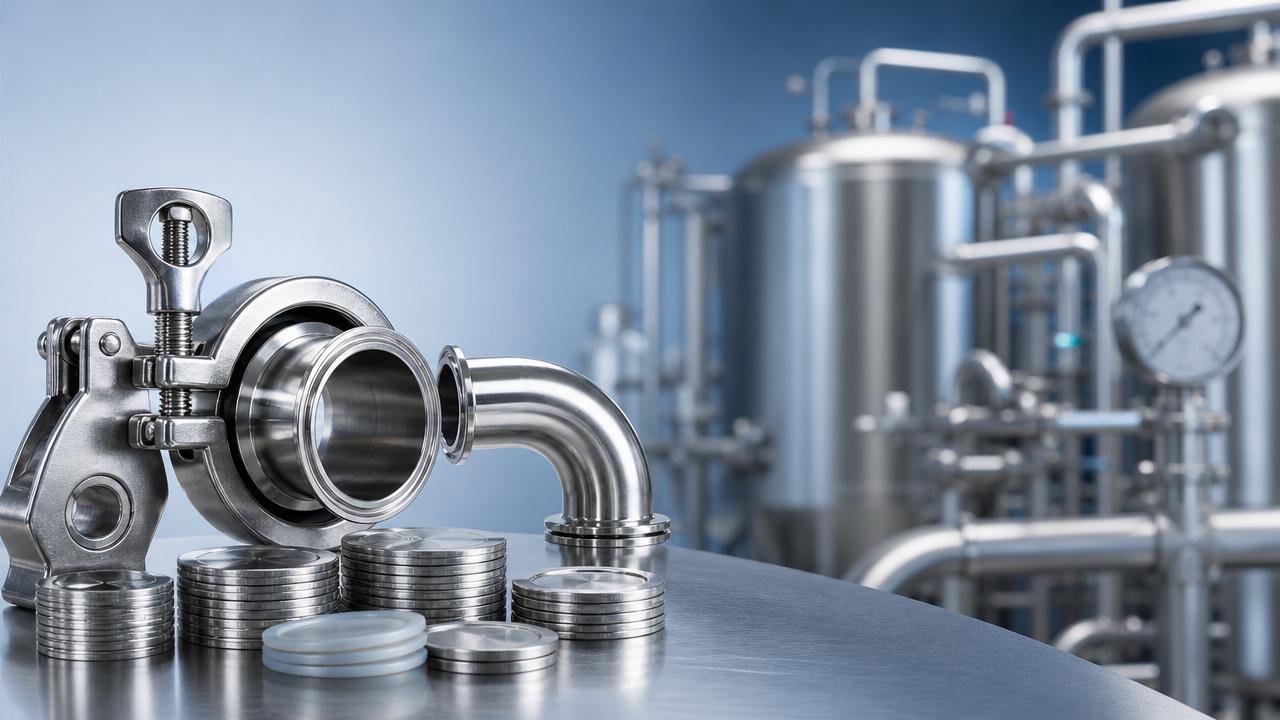
Brew Fittings Cost vs Durability
Choosing Brew Fittings is not only about the lowest unit price.
It is a balance between upfront cost, long-term durability, hygiene, compatibility, and maintenance efficiency.
In beer brewing and kombucha production systems, fittings influence process stability, cleaning performance, and equipment lifespan.
A well-selected fitting reduces leakage, contamination risk, unplanned downtime, and repeated replacement costs.
This guide explains how to compare cost and durability when sourcing Brew Fittings for practical production environments.
Basic Understanding of Brew Fittings
Brew Fittings are connection components used across brewing, fermentation, chilling, transfer, carbonation, and cleaning systems.
They connect tanks, pumps, hoses, heat exchangers, valves, filters, and process instruments.
Common types include tri-clamp fittings, threaded fittings, hose barbs, elbows, tees, reducers, gaskets, and adapters.
The fitting may look small, but it often controls whether a process line remains clean, sealed, and easy to maintain.
For hygienic applications, stainless steel Brew Fittings are widely preferred because they resist corrosion and support repeatable cleaning.
Material grade, surface finish, machining accuracy, gasket quality, and welding quality all affect service life.
A low-cost fitting can perform well when it meets the correct standard and application load.
However, a cheap fitting with poor tolerance can create hidden losses through leaks, contamination, or difficult assembly.
Industry Background and Current Cost Pressures
Modern brewing systems are becoming more modular, automated, and customized.
This increases the number of Brew Fittings used in each complete system.
At the same time, stainless steel prices, logistics costs, and compliance requirements can affect purchase decisions.
The main challenge is avoiding short-term savings that increase lifetime operating cost.
Cost pressure should not lead to random specification changes.
Small differences in Brew Fittings may affect pressure resistance, CIP cleaning, and assembly reliability.
Key Cost Elements Behind Brew Fittings
The visible price of Brew Fittings usually reflects only part of the real cost.
A complete cost review should include production quality, installation labor, maintenance frequency, and replacement risk.
- Material grade: 304 stainless steel is common, while 316 may suit more corrosive conditions.
- Surface finish: smoother surfaces improve cleanability and reduce residue retention.
- Dimensional tolerance: accurate machining supports fast assembly and stable sealing.
- Gasket compatibility: EPDM, silicone, PTFE, and other materials suit different temperatures and media.
- Certification support: documented quality helps align equipment with CE, PED, or internal standards.
Lower-priced Brew Fittings may be acceptable for non-critical utility lines.
Critical product-contact lines usually justify higher durability, better finish, and stronger traceability.
A fitting that costs more but prevents one shutdown may deliver a better financial result.
Durability Factors That Affect Service Life
Durability is not only resistance to breaking.
For Brew Fittings, durability means stable performance under pressure, temperature cycling, cleaning chemicals, and repeated disassembly.
Material and Corrosion Resistance
Stainless steel quality is central to fitting durability.
Poor material may discolor, pit, or weaken after repeated exposure to acidic products or cleaning agents.
For kombucha systems, acid resistance can be especially important because the process environment is naturally low in pH.
Sealing and Pressure Performance
Brew Fittings must maintain consistent sealing during transfer, carbonation, chilling, and cleaning.
Poorly matched clamps, ferrules, or gaskets can cause small leaks that become major operating issues.
Pressure rating should match the system design, especially for carbonated beverage lines and pressure tanks.
Cleaning and Sanitation Durability
CIP cycles expose Brew Fittings to heat, caustic solutions, acidic rinses, and mechanical flow.
Rough surfaces, dead corners, or weak gaskets increase sanitation risk.
Durable hygienic fittings help maintain product consistency and reduce the burden of manual inspection.
Application Value in Brewing and Kombucha Systems
The value of Brew Fittings becomes clear when viewing them as part of the whole process system.
A brewing line depends on many connection points working together without leakage or contamination.
In fermentation areas, fittings support safe transfer, sampling, temperature control, and pressure management.
In chilling systems, they help maintain stable flow and reduce energy loss from poor connections.
In kombucha carbonation systems, reliable Brew Fittings protect pressure integrity and product quality.
For turnkey projects, standardized fittings simplify installation, training, spare parts planning, and future expansion.
Carry Brewtech designs and supplies brewing and kombucha equipment for customized global projects.
Its systems are developed with attention to CE, PED, ISO 9001, and practical quality control expectations.
This approach supports consistent fitting selection across tanks, piping, chilling units, and complete process solutions.
Typical Brew Fittings by Use Scenario
Different process areas require different balances between cost and durability.
A single specification strategy may increase cost without improving system value.
This classification helps prioritize spending where failures are most expensive.
It also prevents over-specifying Brew Fittings in less demanding locations.
Practical Evaluation Checklist
A structured checklist makes comparison easier and reduces sourcing uncertainty.
The goal is to compare total value, not only purchase price.
- Confirm media type, temperature, pressure, cleaning chemicals, and flow conditions.
- Match Brew Fittings with tank nozzles, hoses, valves, pumps, and existing standards.
- Request material information, surface finish details, and tolerance confirmation.
- Check gasket material against cleaning agents and process temperature.
- Review supplier quality control, inspection records, and after-sales responsiveness.
- Calculate replacement frequency, downtime risk, and spare parts inventory cost.
Standardizing common Brew Fittings can simplify maintenance and reduce inventory complexity.
However, special process points may still require customized adapters, reducers, or connection solutions.
A reliable supplier should help clarify these details before production begins.
Common Mistakes When Comparing Cost and Durability
The first mistake is comparing Brew Fittings only by outside appearance.
Two fittings may look similar but differ in alloy quality, finish, wall thickness, and dimensional accuracy.
The second mistake is ignoring gasket performance.
A strong stainless fitting can still fail if the gasket swells, cracks, or loses elasticity.
The third mistake is mixing standards without checking compatibility.
Thread type, clamp size, ferrule geometry, and hose dimensions must align correctly.
The fourth mistake is not considering future expansion.
Compatible Brew Fittings make system upgrades easier when adding tanks, chillers, or carbonation equipment.
Supplier Quality and Documentation Considerations
Supplier capability strongly affects the long-term reliability of Brew Fittings.
Consistent sourcing requires more than a catalog and price list.
Important indicators include manufacturing control, inspection procedures, engineering support, and project experience.
Carry Brewtech has served customers in more than 30 countries through customized brewing and kombucha system solutions.
Its work covers beer brewing equipment, fermentation systems, chilling systems, carbonation systems, and turnkey projects.
For fitting selection, this system-level experience helps align connection parts with complete process requirements.
Documentation also supports easier installation, maintenance planning, and compliance review.
When Brew Fittings are part of a larger equipment package, unified quality control reduces mismatch risk.
Actionable Next Steps for Better Total Value
A practical sourcing decision starts with mapping every fitting location in the process flow.
Then classify each point by hygiene level, pressure demand, cleaning exposure, and maintenance frequency.
Use premium Brew Fittings where failure affects product quality, safety, or production continuity.
Use standard reliable fittings where the application is stable and less critical.
Finally, compare suppliers by total support capability, not only quotation totals.
The best choice is usually the one that combines fair cost, stable durability, and dependable technical alignment.
For customized brewing or kombucha projects, Carry Brewtech can support fitting selection within complete equipment design.
Share process requirements, target capacity, cleaning method, and expansion plans to receive a practical configuration recommendation.
With the right Brew Fittings strategy, systems become easier to clean, safer to operate, and more economical over time.
Quick Links
- ▶ Kombucha Brew Safety Mistakes
- ▶ Kombucha Brew Market Trends 2026
- ▶ Kombucha Brew Equipment Selection
- ▶ Kombucha Brew Cost and Yield Basics
- ▶ Auxiliaries That Improve Brew Stability
- ▶ Auxiliaries Maintenance Warning Signs
- ▶ How to Budget for Auxiliaries
- ▶ Auxiliaries Selection for Small Breweries
- ▶ Auxiliaries and Production Downtime Risk
- ▶ Brew Fittings Material Comparison
Message
Send Your Inquiry
We welcome your cooperation and we will develop with you.