
Choosing Sanitary Brew Fittings
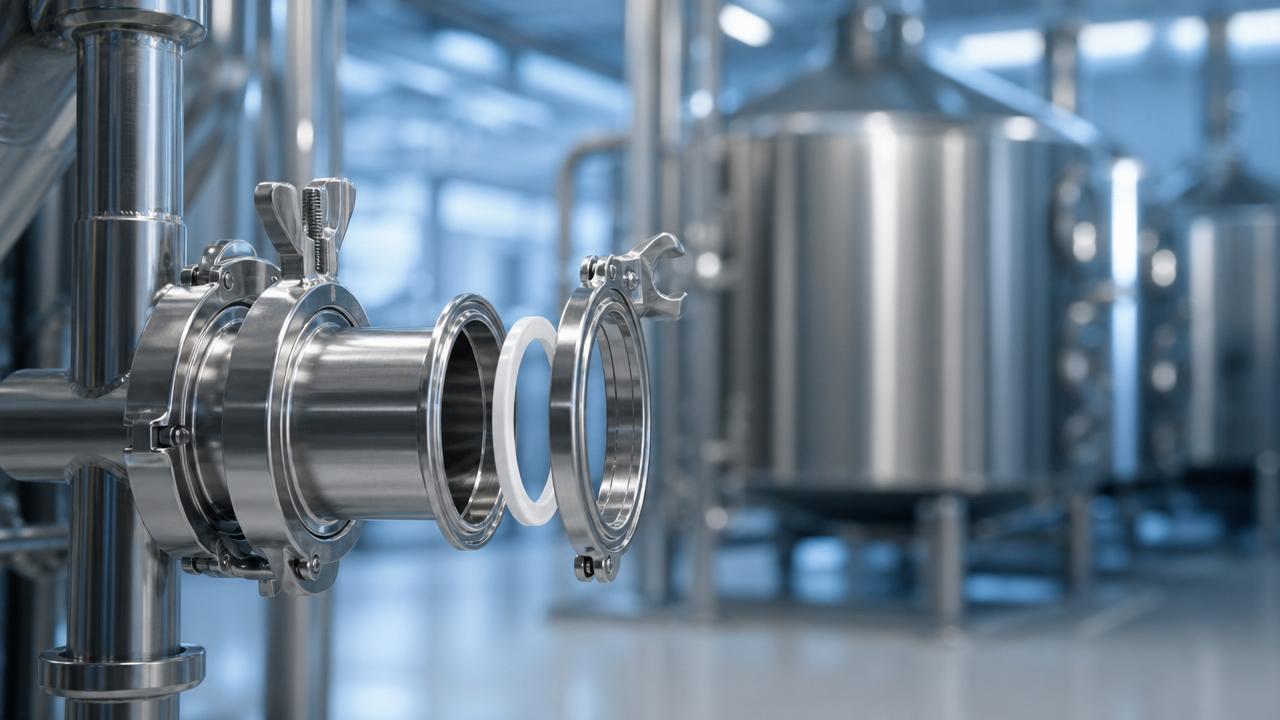
Choosing sanitary Brew Fittings is critical for maintaining product quality, preventing contamination, and ensuring safe, compliant brewing operations.
The right fittings support hygienic connections, reliable cleaning, pressure stability, and long-term performance in beer, kombucha, and turnkey brewing systems.
This guide explains how to evaluate Brew Fittings before purchase, installation, inspection, or system expansion.
Why a Checklist Matters When Selecting Brew Fittings
Brew Fittings look simple, but they directly affect sanitation, flow, cleaning efficiency, and production safety.
A small mismatch in material, gasket, surface finish, or connection type can create dead legs and contamination risks.
A checklist also helps keep system design consistent across brewhouses, fermentation areas, chilling loops, and transfer lines.
For customized brewing projects, sanitary Brew Fittings must match process temperature, pressure, cleaning chemistry, and regulatory expectations.
Core Checklist for Sanitary Brew Fittings
Use the following checklist before confirming Brew Fittings for a new system, replacement order, or process upgrade.
- Confirm stainless steel grade, preferably 304 or 316L, according to beverage acidity, cleaning chemicals, chloride exposure, and expected service life.
- Verify sanitary design with smooth internal transitions, minimal crevices, correct radii, and no unnecessary pockets where residue can remain.
- Check surface finish values, especially product-contact areas, because smoother Brew Fittings clean faster and reduce microbial attachment risk.
- Match connection type to the system, including tri-clamp, DIN, SMS, RJT, threaded, welded, or customized sanitary connections.
- Review gasket material, such as EPDM, silicone, PTFE, or FKM, based on temperature, CIP chemistry, pressure, and beverage compatibility.
- Validate pressure rating and temperature tolerance before using Brew Fittings in carbonation, chilling, transfer, or hot-side applications.
- Measure tubing outside diameter, wall thickness, ferrule length, and clamp compatibility to avoid installation leaks or assembly stress.
- Ensure Brew Fittings support CIP and SIP procedures where required, without manual disassembly after every production cycle.
- Inspect weld quality, especially on elbows, tees, reducers, and customized assemblies, because poor welds compromise hygiene and durability.
- Request documentation when needed, including material certificates, pressure test records, surface finish reports, and compliance references.
Material Selection for Brew Fittings
Stainless steel is the standard choice for sanitary Brew Fittings because it resists corrosion and supports hygienic processing.
304 stainless steel works well in many brewing environments with normal cleaning procedures and controlled water chemistry.
316L stainless steel offers stronger corrosion resistance, especially where acidic beverages, chlorides, or aggressive cleaning agents are present.
Kombucha systems often benefit from 316L product-contact Brew Fittings because acidity can be higher than typical beer applications.
Avoid low-grade stainless parts in sanitary zones, even if the initial price seems attractive.
Inferior Brew Fittings can pit, discolor, trap soils, and shorten the service life of the entire connection point.
Connection Types and Compatibility
Connection selection affects installation speed, cleaning access, maintenance workload, and spare parts management.
Tri-clamp Brew Fittings are widely used because they are easy to assemble, inspect, and remove during maintenance.
Welded fittings reduce external joints and can improve long-term reliability when installed by qualified welders.
Threaded fittings may be useful in utility areas, but they require careful evaluation in product-contact zones.
Before ordering Brew Fittings, compare all existing standards across tanks, pumps, heat exchangers, filters, and valves.
Mixed standards can increase adapter use, which adds cost, cleaning complexity, and potential leak points.
Quick Compatibility Checks
- Compare clamp size, ferrule profile, gasket seat, and tube dimension before approving sanitary Brew Fittings.
- Confirm whether fittings connect to metric, imperial, or region-specific brewing equipment standards.
- Standardize spare gaskets and clamps where possible to simplify maintenance and reduce downtime.
Surface Finish and Hygienic Performance
Surface finish is not only an appearance issue; it directly affects cleaning and microbial control.
Product-contact Brew Fittings should have smooth internal surfaces without burrs, scratches, slag, or sharp transitions.
A rough surface can hold protein, yeast, sugar, hop residue, or kombucha biofilm after cleaning.
When hygienic requirements are high, specify mechanical polishing, electropolishing, or documented roughness values.
Inspect Brew Fittings visually before installation, especially around welds, sealing faces, bends, and internal corners.
Gasket and Seal Selection
Gaskets are small components, but they determine whether Brew Fittings seal correctly under real operating conditions.
EPDM is commonly used in brewing because it handles hot water, steam exposure, and many cleaning chemicals.
Silicone offers flexibility and temperature resistance, but it may not suit every aggressive chemical environment.
PTFE provides strong chemical resistance, though it is less elastic and requires careful installation.
FKM can be suitable for demanding conditions, but compatibility should be checked against specific chemicals and temperatures.
Replace worn gaskets before they flatten, crack, swell, or cause leaks around Brew Fittings.
Application Notes for Beer Brewing Systems
Beer production uses Brew Fittings across mash transfer, wort handling, fermentation, filtration, carbonation, and packaging preparation.
Hot-side fittings must tolerate elevated temperatures, cleaning cycles, and thermal expansion without leakage or deformation.
Cold-side Brew Fittings require stronger hygienic control because contamination after boiling can directly affect final beer quality.
Use sanitary elbows, tees, reducers, sight glasses, and valves that support smooth flow and complete drainage.
Avoid oversized fittings in transfer lines, because low velocity can reduce cleaning effectiveness and increase residue retention.
Application Notes for Kombucha Brewing Systems
Kombucha places different demands on Brew Fittings because acidity, live cultures, and carbonation steps must be controlled carefully.
Select corrosion-resistant materials and hygienic connections for fermentation vessels, transfer lines, carbonation skids, and filling interfaces.
Dead zones are especially risky in kombucha systems, as sugar and culture residues can support unwanted microbial growth.
Choose Brew Fittings that allow full drainage after CIP and reduce manual cleaning in hard-to-reach areas.
Application Notes for Turnkey Brewing Projects
In turnkey projects, Brew Fittings should be selected as part of the complete process layout, not as separate hardware.
Tank nozzles, pumps, heat exchangers, glycol lines, CIP stations, and piping routes must be reviewed together.
A consistent fitting standard improves installation efficiency, operator training, maintenance planning, and future system expansion.
Carry Brewtech designs and manufactures brewing systems according to customer requirements, CE and PED expectations, and quality management procedures.
For customized systems, properly specified Brew Fittings help align hygienic design with production capacity and process goals.
Commonly Overlooked Risks
Using Fittings Without Drainability
Poorly oriented Brew Fittings can trap liquid after cleaning, creating hidden contamination points in otherwise well-designed systems.
Check slope, valve position, reducer orientation, and low points before final installation.
Ignoring Clamp Torque and Seal Compression
Overtightening clamps can deform gaskets, while undertightening may cause leaks during pressure changes.
Train installers to assemble Brew Fittings consistently and inspect gasket alignment before every restart.
Mixing Unknown Materials
Unverified fittings may look similar, but alloy composition, surface finish, and pressure rating can vary widely.
For critical sanitary zones, use traceable Brew Fittings with reliable material and quality documentation.
Forgetting Future Maintenance
A fitting that is difficult to access can slow inspections, gasket replacement, and emergency repairs.
Leave enough clearance around Brew Fittings, valves, pumps, and tank ports during layout planning.
Practical Execution Recommendations
- Create a fitting schedule that lists size, material, connection standard, gasket type, pressure rating, and installation location.
- Group Brew Fittings by sanitary zone, utility zone, hot-side process, cold-side process, and cleaning circuit.
- Confirm compatibility with tanks, pumps, chillers, carbonation systems, and fermentation equipment before shipment.
- Inspect all sealing surfaces before installation, and reject damaged fittings that may compromise hygiene.
- Document replacement intervals for gaskets, clamps, and high-use Brew Fittings in preventive maintenance plans.
- Review cleaning validation results after equipment changes, especially when new fitting types are introduced.
Final Checklist Before Purchase
- Define the beverage, process temperature, pressure range, and cleaning method before selecting Brew Fittings.
- Choose stainless steel grade and gasket material based on real chemical and operating exposure.
- Standardize connection types to reduce adapters, spare part complexity, and installation mistakes.
- Check sanitary design, surface finish, weld quality, and drainability before installation approval.
- Work with an equipment supplier that understands brewing process design, compliance, and hygienic fabrication.
Conclusion and Next Step
Sanitary Brew Fittings are essential to product safety, cleaning efficiency, system reliability, and beverage consistency.
The best choice depends on material, connection type, gasket compatibility, surface finish, pressure rating, and system layout.
Before confirming any order, build a complete checklist and compare each fitting against actual process conditions.
Carry Brewtech supports beer, kombucha, chilling, fermentation, carbonation, and turnkey brewing projects with customized system solutions.
Share your process requirements, and review Brew Fittings together with the full equipment design for a safer, cleaner, and more efficient operation.
Quick Links
- ▶ Kombucha Brew Safety Mistakes
- ▶ Kombucha Brew Market Trends 2026
- ▶ Kombucha Brew Equipment Selection
- ▶ Kombucha Brew Cost and Yield Basics
- ▶ Auxiliaries That Improve Brew Stability
- ▶ Auxiliaries Maintenance Warning Signs
- ▶ How to Budget for Auxiliaries
- ▶ Auxiliaries Selection for Small Breweries
- ▶ Auxiliaries and Production Downtime Risk
- ▶ Brew Fittings Material Comparison
Message
Send Your Inquiry
We welcome your cooperation and we will develop with you.